
Mental Health Awareness Month
Hair Loss and Mental Health: Why Talking About It Matters
Hair loss is not “just hair.” For many men and women, it can affect confidence, identity, privacy, and emotional well-being.
Private, one-on-one appointments in Fairview Park

But you are not alone.
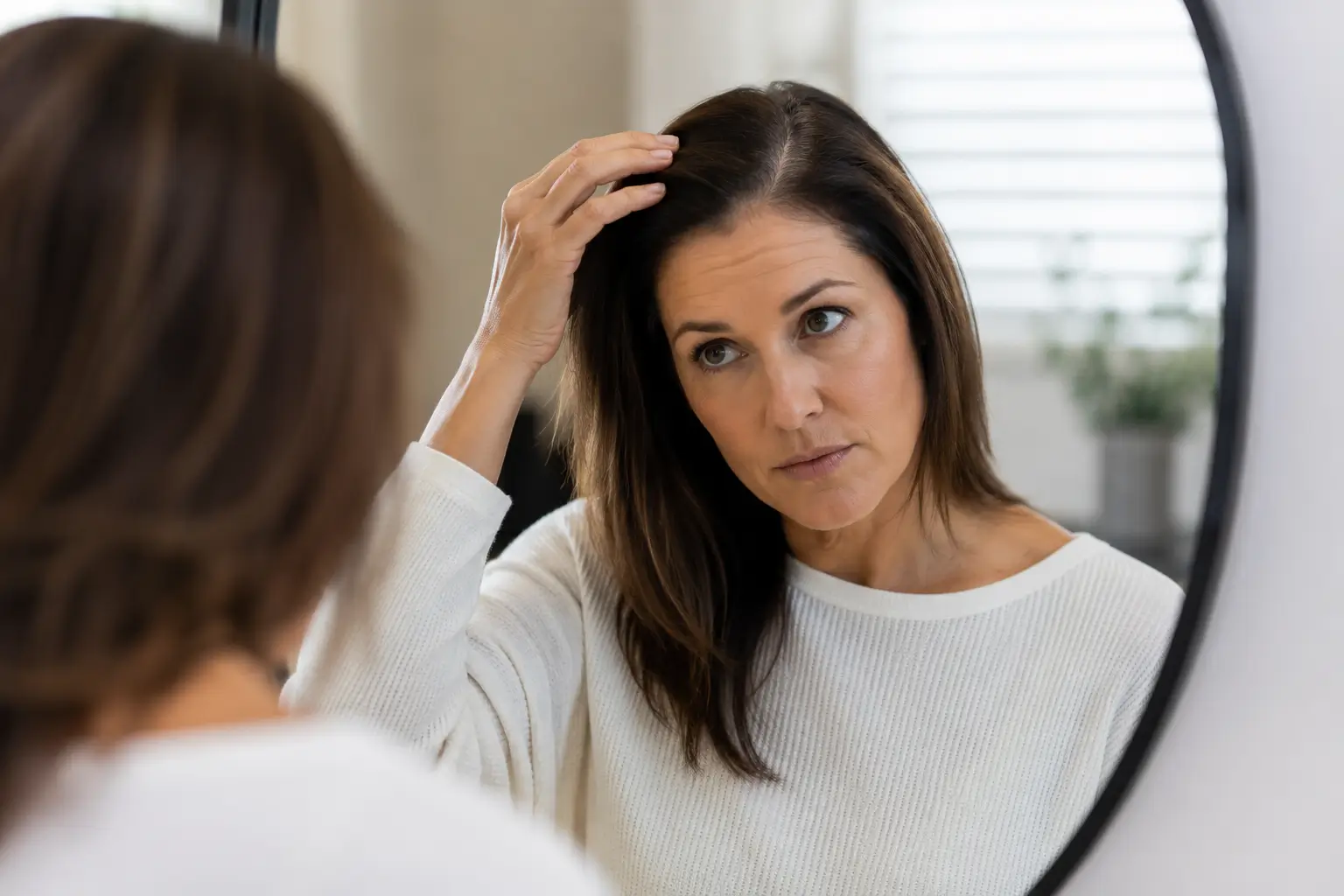
Hair Loss Can Affect More Than Appearance
Hair is often tied to identity, confidence, and self-expression. So when it begins to thin, shed, or change, it can bring up emotions that are difficult to explain.
Embarrassment
Some people feel embarrassed or unsure how to talk about what is happening.
Anxiety
Some feel anxious every time they wash, brush, style, or look closely at their hair.
Avoidance
Some avoid photos, social situations, bright lighting, or activities they once enjoyed.
Loss of Self
Some feel like they are losing a part of themselves or no longer feel like they look like “them.”
For men experiencing hair loss, there may be pressure to “just accept it” or act like it does not matter.
For women, hair loss can feel especially isolating because it is still not talked about openly enough. Many women feel like they should hide it, cover it, or figure it out privately.
Hair loss also does not only affect older men. It can affect younger men experiencing hair loss, women, and even teenagers. When hair loss is framed only as an “old man” issue, it can make younger people feel even more isolated or prematurely aged.
And when women experiencing hair loss are left out of the conversation, it can make their experience feel invisible.
But the emotional side of hair loss is real — and it deserves care, compassion, and support.
Silence Can Make Hair Loss Feel Heavier
One of the hardest parts about hair loss is that many people do not talk about it.
They may worry that others will not understand. They may feel embarrassed. They may think they are the only ones dealing with it. They may keep trying products, styles, hats, powders, or quick fixes without ever having a real conversation about what is happening.
But when something deeply affects your confidence and daily life, carrying it alone can add more emotional stress.
Talking About Hair Loss Does Not Mean:
- That you are vain.
- That you are overreacting.
- That you are weak.
It means you are acknowledging something that matters to you. And that is often the first step toward feeling more in control.
You Are Not Alone
Hair loss affects both men and women for many different reasons, including heredity, hormones, stress, illness, medications, scalp conditions, autoimmune conditions, chemotherapy, trichotillomania, and more.
The cause may be different from person to person, but the emotional impact is often similar.
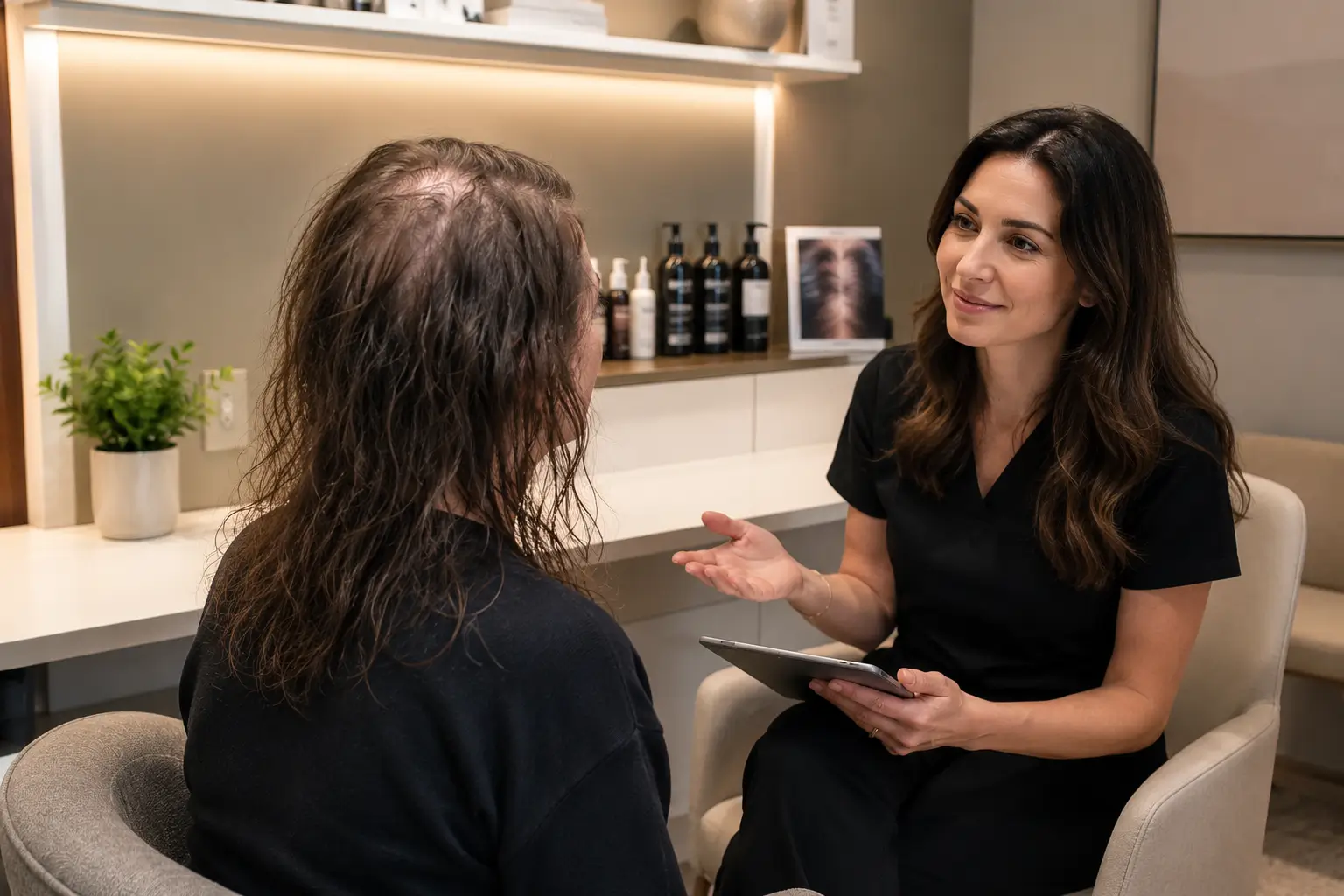
Many people sit in our private rooms and say some version of:
That is why creating a private, compassionate space matters so much. Hair loss is personal. The conversation around it should feel safe, respectful, and judgment-free.
Hair Loss Usually Needs More Than a Quick Fix
When someone first notices thinning, shedding, itching, or changes in the scalp, it is natural to look for the fastest solution.
But hair loss is rarely that simple.
The right approach depends on what is actually happening. Is the issue related to scalp health? Is there inflammation, excess oil, buildup, or irritation? Is the hair shedding temporary? Is the follicle changing? Is the person at a point where added coverage, a topper, a wig, or another custom solution would help them feel more confident?
That is why guessing can become frustrating. The goal is not to chase every quick fix. The goal is to understand what is happening and find the right path forward.
Finding a Solution Can Be Empowering
Addressing hair loss does not always mean there is one simple answer. For some people, the right first step may be understanding their scalp health. For others, it may mean exploring a hair topper, a custom wig, a CNC hair prosthetic, or another non-surgical hair solution.
If You Are Shedding, Itching, or Seeing Scalp Changes
A ScalpCheck® may be the right place to begin. This helps us look more closely at your scalp and better understand what may be contributing to your symptoms.
If You Are Ready for More Coverage
A private Hair Solution Consultation can help you explore custom wigs, toppers, extended-wear attachment, CNC hair prosthetics, and other personalized options.
The important thing is this: you do not have to keep guessing by yourself. Finding support can help you move from fear and uncertainty to clarity and possibility.
Talking About Hair Loss Can Help Someone Else, Too
One of the most powerful things that can happen after someone finds support is that they become a source of encouragement for someone else.

That kind of openness can be incredibly empowering.
Because when one person is willing to say, “I dealt with this too,” someone else may finally feel less alone.
Hair Loss Is Personal, But It Should Not Be Taboo
Hair loss is more common than many people realize, but because it is often hidden, it can feel isolating.
Mental Health Awareness Month is a good reminder that emotional wellness encompasses how we see ourselves, how we move through the world, and how confident we feel in everyday life.
If hair loss has been weighing on you, you do not have to dismiss it. You do not have to pretend it does not matter. And you do not have to figure it out alone.
The first step is simply being willing to start the conversation.
Ready to Take the First Step?
If you are experiencing shedding, scalp irritation, itching, or changes in your hair and scalp, a ScalpCheck® may be the right place to begin.
If you are ready to explore custom hair solutions such as toppers, wigs, extended-wear attachment, or CNC hair prosthetics, a private Hair Solution Consultation can help you understand your options.
Private, compassionate support for men and women in Fairview Park and the greater Cleveland area.