
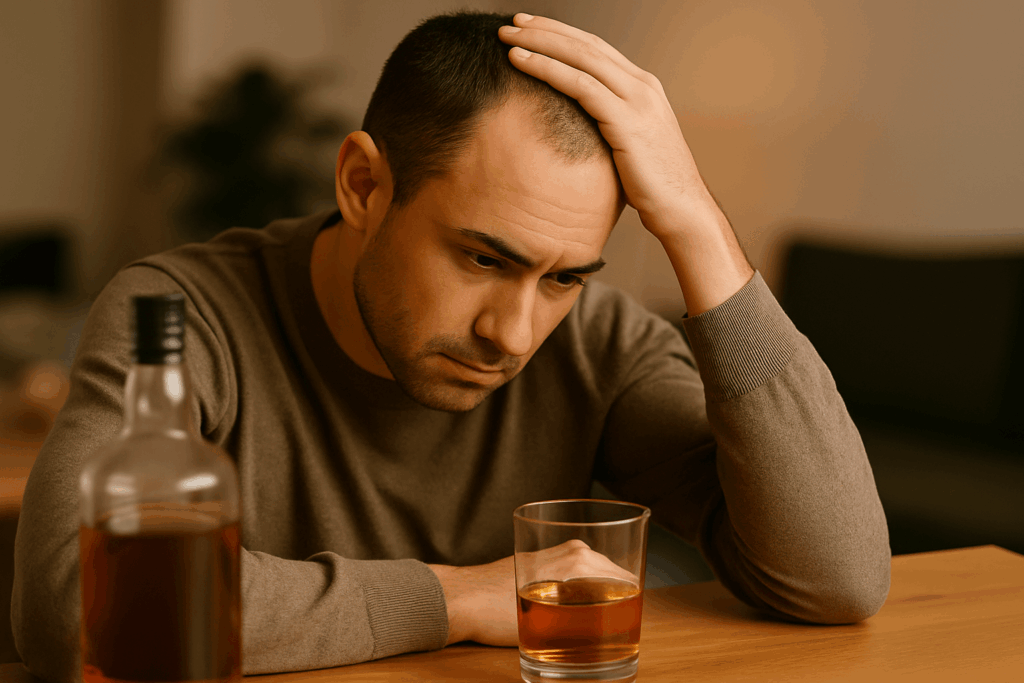
1. Stress and Cortisol: The Hidden Connection
Stress is one of the most common internal triggers of hair loss. According to Harvard Health, elevated cortisol levels can push hair follicles into a resting phase — a process known as telogen effluvium — where shedding occurs more easily. When this happens repeatedly, it can lead to visible thinning across the scalp. High stress also disrupts hormone balance and scalp oil production, often resulting in increased itch, dandruff, or inflammation that further weakens hair growth.
This often shows up as sudden shedding or gradual thinning across the scalp. From a trichological perspective, this is one of the first patterns we assess during a ScalpCheck® evaluation.

2. Nutrient Deficiency and Poor Diet
Alcohol doesn’t directly cause hair loss, but it can disrupt the body’s ability to absorb and utilize essential nutrients that support scalp and follicle health. As the Cleveland Clinic explains, chronic alcohol use can deplete vitamins and minerals, alter hormone balance, and interfere with the body’s natural detoxification process — all of which affect how well hair grows and renews. When the body prioritizes vital organs over nonessential processes like hair growth, follicles receive fewer nutrients and oxygen, leading to weaker strands and increased shedding.
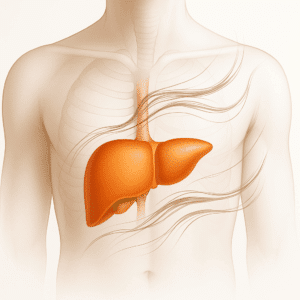
3. Liver Function and Detoxification
Your liver is one of the body’s main detox organs — it filters toxins and metabolizes hormones that affect hair growth. Excessive alcohol consumption burdens the liver, making it less efficient. The result? A buildup of metabolic waste and hormonal imbalances that indirectly slow new hair growth.
4. Sleep and Scalp Health
Alcohol may help you fall asleep faster, but it reduces deep, restorative sleep — the phase where cellular repair occurs. Poor sleep patterns elevate stress hormones and impair scalp microcirculation, which limits nutrient delivery to follicles. Healthy hair begins with quality rest.
5. Medications, Mental Health, and Hair Loss
For some, alcohol use coexists with anxiety, depression, or other health issues that require medication. Certain antidepressants, beta-blockers, and other drugs can list hair loss or shedding as side effects. When paired with nutrient depletion or hormonal imbalance, these effects can be amplified.
When Alcohol Isn’t the Root Cause — But the Trigger
It’s important to understand that alcohol isn’t the direct cause of hair loss. Rather, it’s the physiological and lifestyle ripple effects — stress, sleep disruption, nutrient imbalance, and hormonal changes — that contribute to scalp and hair problems. The good news? With the right trichological assessment, these triggers can often be reversed or minimized.
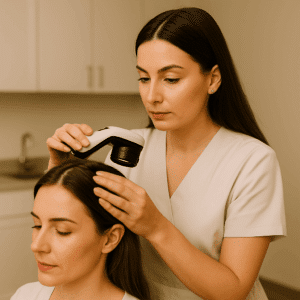
Restore Balance Through Professional Scalp Evaluation
At our Cleveland-based Hair & Scalp Specialists, we help clients uncover the root cause of their hair loss through ScalpCheck® — a comprehensive analysis that evaluates the scalp, oil activity, and follicle function using advanced microscopy. Once we understand what’s happening below the surface, we can recommend a tailored scalp treatment or hair restoration plan that truly works.
Healthy hair begins with a healthy scalp — and that starts with understanding what’s really influencing it.
Related Reading:
Frequently Asked Questions
Can alcohol cause hair loss?
Not directly. However, chronic drinking can trigger stress, nutrient loss, poor sleep, and hormonal imbalance — all of which can cause shedding and weaker hair.
Will quitting alcohol help hair growth?
Yes, many clients see improvement in scalp condition and hair strength after reducing or eliminating alcohol, especially when combined with proper scalp care and nutrition.
How can a trichologist help?
A trichologist can identify whether your hair loss is stress-related, nutrition-related, or due to scalp imbalance — helping you build a targeted plan to restore both scalp health and confidence.