
When “Repair” Products May Be Adding to the Problem
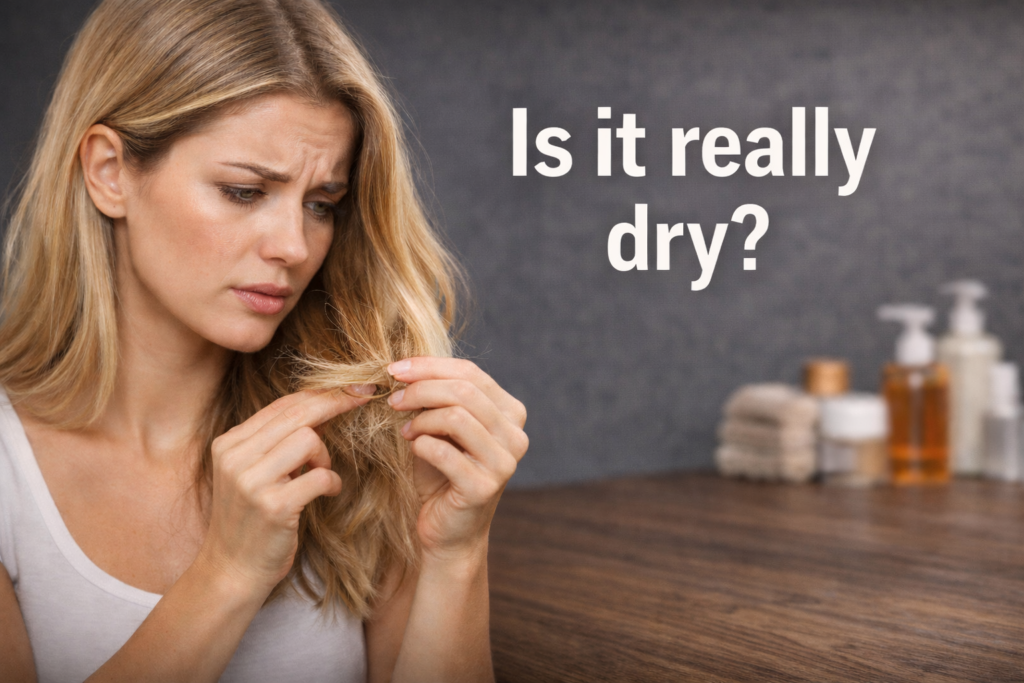
We were recently featured in HuffPost in an article discussing protein overload in hair care. It’s a helpful topic, but in practice, the bigger issue we often see is this: many women are not quite sure whether they’re dealing with dryness, breakage, product buildup, or a scalp issue that’s being overlooked.
That confusion matters.
When hair starts feeling rough, brittle, tangled, or harder to manage, most people do what seems logical. They reach for products labeled repair, strengthening, or bond-building. Sometimes that helps. Sometimes it doesn’t. And sometimes it makes the hair feel even worse.
Protein can absolutely be beneficial for hair. But like many things in hair care, balance matters.
Why Protein Can Help Damaged Hair
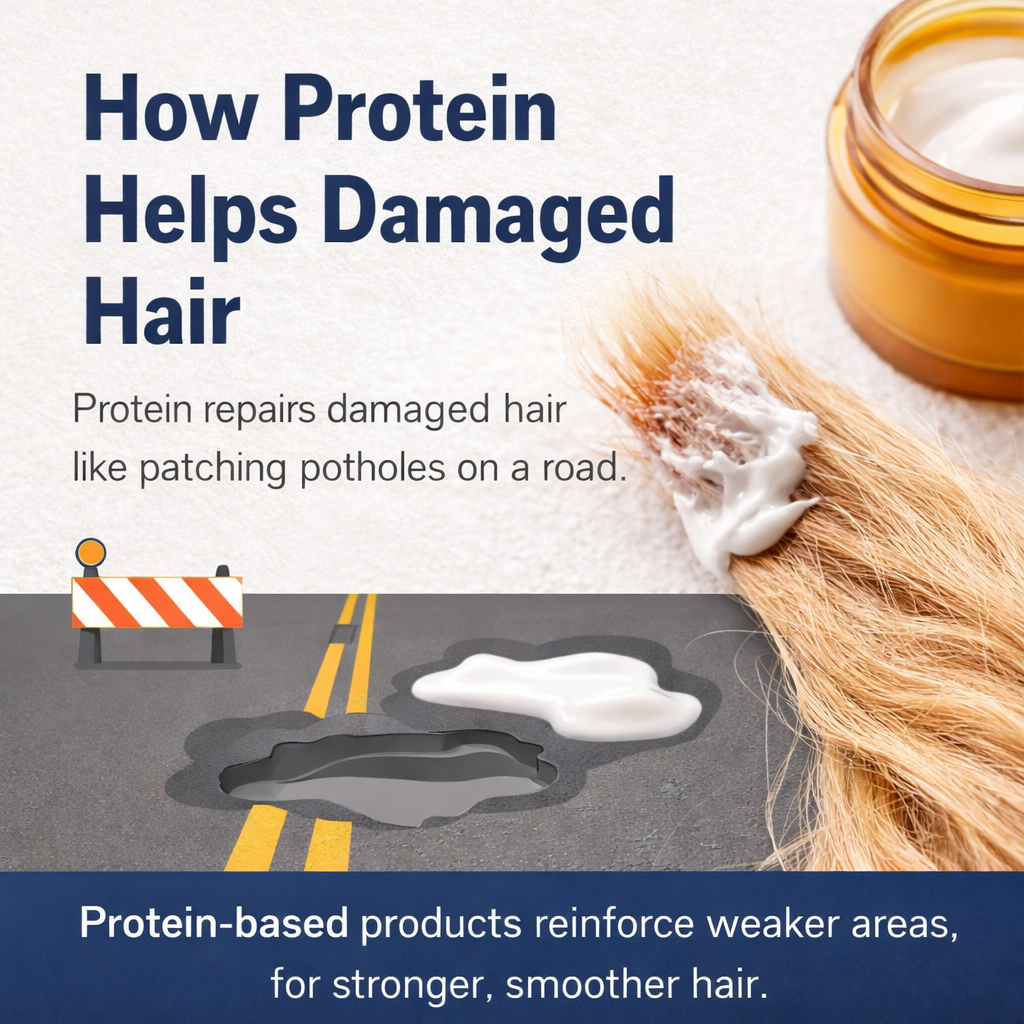
Hair fiber is primarily made of keratin, a structural protein that helps give each strand strength and resilience. When hair has been weakened by heat styling, chemical services, sun exposure, or general wear and tear, protein-based products can help reinforce damaged areas of the hair shaft.
I often explain it like filling potholes in a road. Protein can help patch weakened spots so hair feels stronger and smoother.
Used appropriately, protein can be a useful part of a healthy hair routine.
When Protein Starts Working Against You
Problems usually begin when protein is layered too often, especially on hair that is already dehydrated or lacking flexibility.
Instead of feeling healthier, the hair may start to feel:
- stiff
- rough
- straw-like
- tangled
- static-prone
- brittle
Rather than stretching and bouncing back, it may snap more easily.
That is what many people refer to as protein overload.
This does not mean protein is bad. It means the hair may be getting more reinforcement than it can comfortably handle without enough moisture, softness, and flexibility to balance it out.
Why Protein Overload Is So Easy To Misread
One of the most frustrating parts of protein overload is that it can look a lot like simple dryness.
Both can cause:
- rough texture
- dullness
- tangling
- frizz
- breakage
So people often assume they just need more conditioning, more repair, or more treatment products.
The real difference is usually how the hair behaves.
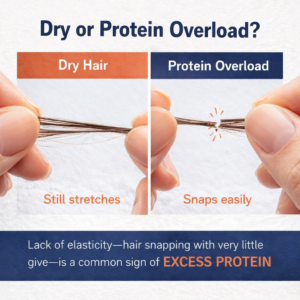
Dry hair often softens when moisture is restored and still has some give. Hair affected by excess protein tends to feel more rigid. Even after conditioning, it may still feel rough and snap easily with very little stretch.
A simple at-home clue is elasticity.
If you gently stretch a damp strand of healthy hair, it should have a little give and then return. If the strand breaks quickly with very little stretch, that can be a sign the fiber has become too rigid.
Where Breakage Shows Up Matters
Another clue is where the breakage appears.
Typical dryness and wear usually show up more through the mid-lengths and ends. Those parts of the hair are older and have been exposed to more brushing, heat, color, and environmental stress.
When protein is part of the problem, breakage may sometimes show up in areas that people do not expect, such as closer to the scalp or around the crown. That can happen when the strand has lost flexibility more broadly, not just at the ends.
This is also where many people begin to think they are shedding more than usual.
Breakage vs. Shedding: Why So Many People Get It Wrong
This is one of the biggest areas of confusion.
If you are seeing shorter hairs on your clothing, pillow, brush, or bathroom counter, it can feel like your hair is falling out more than normal. But in some cases, what you are actually seeing is breakage, not true shedding from the root.
That distinction is important.
Normal shedding is part of the natural hair cycle. But when brittleness and breakage are layered on top of normal shedding, hair can feel thinner, weaker, and more fragile very quickly.
This is one reason self-diagnosing hair problems at home can be so frustrating. The symptoms overlap, but the cause is not always what people think.
The Scalp Can Still Be Part of the Problem
This is where the conversation gets bigger than just protein.
Sometimes hair is not only reacting to what is happening along the strand. It is also being affected by what is happening at the scalp.
If someone is also dealing with:
- persistent itch
- excess oil
- buildup
- flaking
- irritation
- inflammation
- poor cleansing habits
- product residue at the scalp
then the hair may never fully improve until those issues are addressed too.
That is why it is not always enough to ask, “Does my hair need protein or moisture?”
Sometimes the better question is, “What is actually happening on my scalp, and is that contributing to what I’m seeing in my hair?”
Which Products Tend To Be More Protein-Heavy?
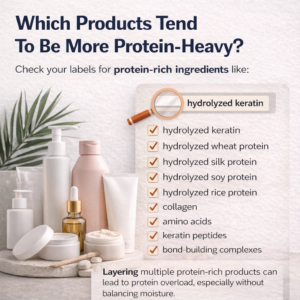
If you suspect your routine may be protein-heavy, check your labels for ingredients such as:
- hydrolyzed keratin
- hydrolyzed wheat protein
- hydrolyzed silk protein
- hydrolyzed soy protein
- hydrolyzed rice protein
- collagen
- amino acids
- keratin peptides
- bond-building complexes
These ingredients are not inherently bad. The issue is usually not one product alone. It is often the layering of several protein-containing products together without enough moisture support.
What To Do First If You Suspect Protein Overload
If your hair has started feeling brittle, rough, or unusually rigid, simplify first.
A reset often includes:
- pausing protein-heavy masks, leave-ins, conditioners, and styling products
- switching to a gentle, hydrating shampoo
- using a moisturizing conditioner to improve softness and slip
- avoiding excessive clarifying
- reducing heat styling for a short period
- giving the hair time to regain flexibility
Once the hair feels softer and more elastic again, protein can usually be reintroduced more selectively.
The goal is not to eliminate protein forever. The goal is to restore balance.
When It’s Time To Stop Guessing
If hair still feels brittle even after you shift to moisture-focused care, or if you are noticing symptoms like:
- breakage closer to the scalp or crown
- increased shedding
- itch
- oiliness
- dandruff
- buildup
- irritation
then it may be time for a closer look.
Hair and scalp issues overlap more than people realize. What looks like dryness may not be dryness. What looks like shedding may actually be breakage.
If you’re concerned about thinning or ongoing hair changes, understanding your hair loss solutions can be an important next step alongside evaluating your scalp health.
How ScalpCheck® Can Help
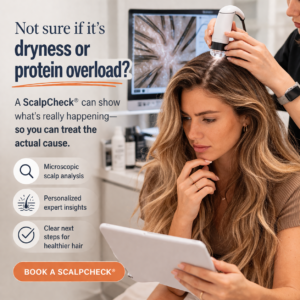
At Jeffrey Paul’s Hair & Scalp Specialists, ScalpCheck® helps us take a closer look at what may be affecting both the scalp environment and the condition of the hair.
A ScalpCheck® evaluation can help assess:
- scalp condition
- buildup and congestion
- oil levels
- signs of irritation or inflammation
- overall follicle environment
- factors that may be contributing to breakage or shedding
That matters because the right next step depends on understanding what is really going on.
If the issue is mainly within the hair shaft, the routine may need to be adjusted. If the scalp is also part of the problem, that needs attention too.
Either way, guessing can keep you stuck longer than necessary.
The Bottom Line
Protein can be helpful for damaged hair. In the right amount, it can support strength and improve the feel of the hair.
But too much protein, especially when layered too often, can leave hair feeling stiff, brittle, rough, and more prone to breakage.
If your hair has started feeling worse instead of better, it may not need more repair. It may need better balance. And in some cases, it may need a closer look at the scalp as well.
That is where ScalpCheck® can help.
Not sure whether you’re dealing with dryness, breakage, buildup, or a scalp issue?
A ScalpCheck® evaluation can help identify what may be affecting your hair and scalp so you can stop guessing and start treating the right problem.