
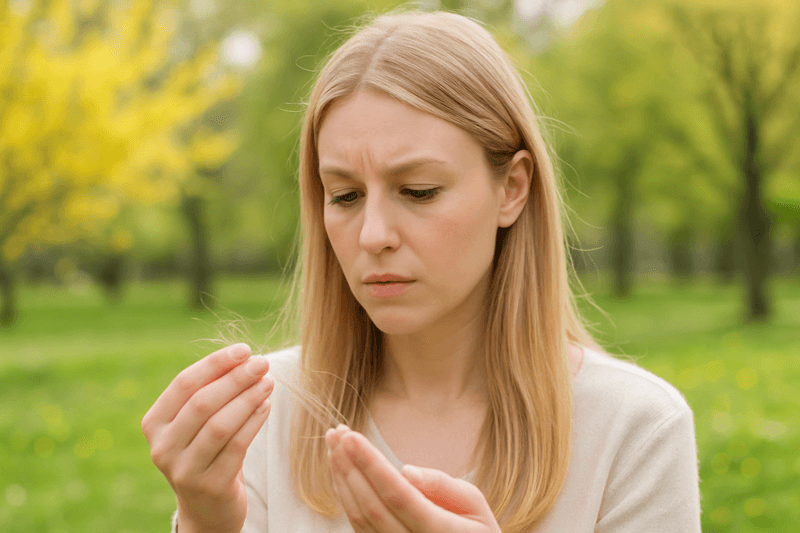
Have you noticed more hair in your brush, shower drain, or on your pillow during certain times of the year? You are not alone. Seasonal hair shedding is a real and common experience, especially during the spring and fall months.
For many people, this increase in shedding is temporary. But in some cases, what looks like seasonal shedding may actually be a sign of an underlying scalp or hair-loss issue. Knowing the difference is important, and that starts with understanding what is normal, what is not, and when it is time to take a closer look.
What Is Seasonal Hair Shedding?
Hair grows in cycles, and changes in weather, temperature, humidity, and light exposure can influence those cycles. Because of that, many people notice increased shedding during seasonal transitions, especially in:
- Spring (March through May)
- Fall (September through November)
Seasonal shedding is often temporary and may settle down on its own. It can happen when more hairs shift into the resting and shedding phases of the growth cycle at the same time.
Why Does Hair Shed More in Certain Seasons?
Researchers believe seasonal hair shedding may be influenced by changes in daylight exposure and the body’s natural biological rhythms. Hair follicles are sensitive to hormonal signals tied to light cycles, which can affect when hairs shift from the growth phase into the resting and shedding phases.
During late summer and early fall, more hairs may enter the resting phase (telogen), which can lead to noticeable shedding a few months later. Similarly, seasonal shifts in spring can trigger another temporary adjustment in the hair cycle.
While this process can feel alarming, it is often part of the body’s natural rhythm. However, when shedding becomes excessive or does not slow down over time, it may signal an underlying scalp or hair-growth issue that deserves closer attention.
Is Spring Hair Shedding Normal?
Yes, for many people, spring hair shedding can be normal. As the body adjusts to seasonal changes, it is not unusual to notice more hair fall in April and May. This may show up as extra strands in the shower, more hair in your brush, or even changes in scalp balance that can lead to concerns like an itchy scalp.
If your overall density still looks the same and the shedding slows back down within a reasonable period, it is often part of a normal cycle.
Is Fall Hair Shedding Normal?
Fall is another time when people commonly notice increased shedding. Just like spring, the transition into a new season can affect the hair growth cycle. For some, this is mild. For others, it feels much more dramatic.
The key question is not simply whether you are shedding, but whether your hair is recovering normally afterward.
When Should You Be Concerned About Hair Shedding?
Some shedding is normal. In many cases, losing around 80 to 100 hairs per day is considered part of the normal cycle. However, it may be time to look deeper if you notice:
- Visible thinning areas or patchy spots
- A widening part line
- More scalp showing than usual
- Excessive hair collecting in your brush, shower, or on your pillow
- Shedding that continues for weeks without slowing down
- Hair that seems slower to regrow
These signs may point to something more than normal seasonal shedding, such as hereditary hair loss, stress-related shedding, inflammation, scalp buildup, or underlying scalp conditions.
How a ScalpCheck® Can Help Identify the Cause
At Jeffrey Paul’s Hair & Scalp Specialists, we use ScalpCheck® to take a closer look at what may be contributing to shedding. This microscopic scalp analysis allows us to better understand what is happening beneath the surface.
A ScalpCheck® can help evaluate:
- Oil and hydration levels
- Scalp buildup and signs of irritation
- Follicle density and activity
- Overall scalp condition
This helps us determine whether you are experiencing typical seasonal shedding or whether another issue may be affecting your hair growth cycle.
What Can Help Support Healthy Hair Growth?
The right next step depends on what is causing the shedding. In some cases, improving scalp health, reducing buildup, and supporting the hair growth cycle can make a meaningful difference.
For some guests, we may recommend targeted home care or supportive options such as the Havogen 5 Patch as part of a broader plan. But the most important first step is understanding what your scalp actually needs.
Final Thoughts: Don’t Ignore Ongoing Shedding
Seasonal hair shedding can be normal, but ongoing or excessive shedding should not be ignored. If you are noticing more hair fall this spring or fall and are unsure whether it is temporary or something more, the best place to start is with a professional evaluation.
Our team can help you better understand what your scalp and hair may be telling you and recommend the right next step for your needs.
Seasonal Hair Shedding FAQ
Is it normal to lose more hair in the spring?
Yes. Many people notice increased shedding during seasonal transitions, particularly in the spring. This can happen as the hair growth cycle responds to changes in temperature, sunlight, and environmental conditions.
How long does seasonal hair shedding last?
Seasonal shedding is usually temporary and may last several weeks. If shedding continues longer or leads to noticeable thinning, it may be helpful to have your scalp evaluated.
When should I worry about seasonal hair shedding?
If shedding is accompanied by thinning areas, widening part lines, patchy hair loss, or slow regrowth, it may be time to investigate possible scalp or hair-loss conditions.