
Can Stress Hormones Like Cortisol Cause Hair Loss? Here’s What Really Happens to Your Scalp

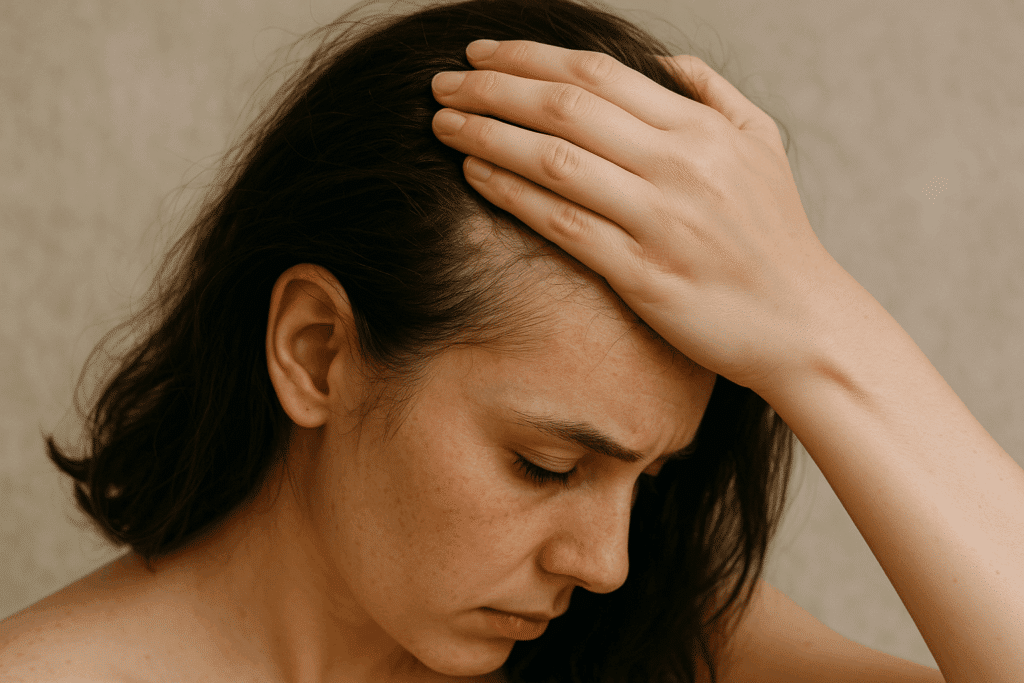
Close-up of a woman gently touching her scalp, symbolizing stress-related scalp sensitivity caused by elevated cortisol levels. The image represents how chronic stress hormones can affect scalp health and hair growth.

Most people understand that stress can affect their body — tight shoulders, poor sleep, or changes in appetite — but few realize it can also impact the scalp.
We see this connection every day. When cortisol (the body’s main stress hormone) remains elevated for too long, it can disrupt the normal function of the scalp and hair follicles.

Cortisol is essential in short bursts — it helps your body respond to immediate challenges. But when life stress becomes chronic, so does cortisol. That imbalance changes how your body distributes energy and nutrients, leading to scalp irritation, shedding, and weaker regrowth over time.

Let’s explore exactly how this happens — and how a trichological scalp analysis can help restore balance and healthier hair.
Does Alcohol Cause Hair Loss? Understanding the Real Connection Between Drinking and Hair Health

close-up of a man washing his hair in the shower, symbolizing healthy scalp care and prevention of hair lossWhen most people think about hair loss, alcohol doesn’t usually make the list of causes. But while alcohol itself doesn’t directly cause hair loss, the effects it has on your body — from disrupting sleep to depleting nutrients — can absolutely affect the health of your scalp and hair. Let’s explore what’s really happening beneath the surface.

1. Stress and Cortisol: The Hidden Connection

Stress is one of the most common internal triggers of hair loss. According to Harvard Health, elevated cortisol levels can push hair follicles into a resting phase — a process known as telogen effluvium — where shedding occurs more easily. When this happens repeatedly, it can lead to visible thinning across the scalp. High stress also disrupts hormone balance and scalp oil production, often resulting in increased itch, dandruff, or inflammation that further weakens hair growth.

Hair Helps Heal

Thinning tresses and hair loss can be difficult for men and women of any age. Hair loss can be caused by a variety of factors, including stress, hereditary, the result of illness or disease, or a side effect of medical treatments such as chemotherapy. Any hair loss can be traumatic and impart serious damage to one’s self-esteem.

We’ve heard it from many of our guests – their stress levels may have initially caused their hair loss, which resulted in additional strain. It’s a vicious cycle that’s extremely difficult to break. In dealing with all this added pressure, people turn to different coping mechanisms, such as overeating, staying within the confines of their home or overspending. These methods bring about their own problems and can result in even more concern for the person and their loved ones.