
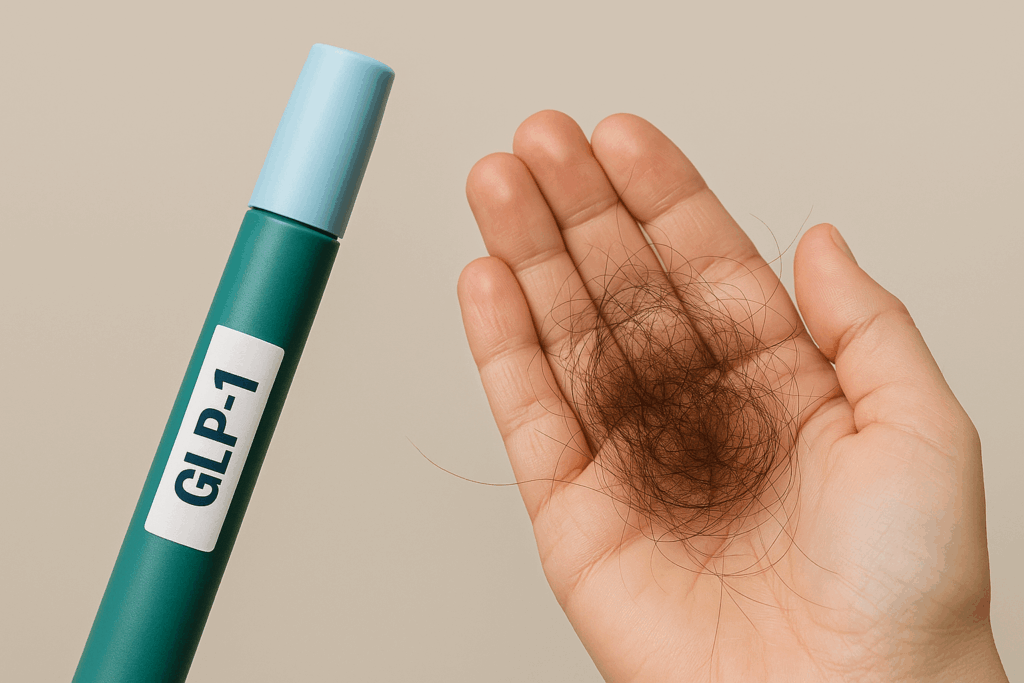
GLP-1 weight-loss medications like Ozempic®, Wegovy®, and Mounjaro® have changed lives. But as more women begin or complete their weight-loss journeys, one unexpected concern keeps coming up:
“Why am I losing hair?”
Hair thinning is not an official side effect of GLP-1 drugs, but that does not mean it is not happening. In fact, many women notice:
- Extra shedding in the shower
- A widening part
- Thinner ponytails
- More visible scalp
- Hair that feels weaker or grows back finer
The good news: Most GLP-1–related hair loss is indirect and often reversible. But in some cases, thinning can progress into visible loss that benefits from early intervention or cosmetic solutions.
Let’s break down why it happens and what you can do to protect and restore your hair.
GLP-1 Drugs Do Not Directly Cause Hair Loss — But These 3 Things Do
While these medications do not attack the follicles themselves, they do create conditions that can trigger shedding or accelerate thinning.
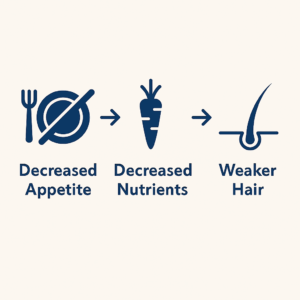
1. Decreased Appetite, Decreased Nutrients, Weaker Hair
GLP-1 drugs dramatically reduce appetite. While this supports weight loss, it also means many women unintentionally eat:
- Less protein
- Fewer essential minerals
- Not enough healthy fats
- Limited iron, zinc, and B vitamins
Your body then prioritizes vital organs. Hair is not essential for survival, so when nutrients run low, the hair follicle gets less support.
This can lead to:
- Weaker new growth
- Finer strands
- Brittle hair
- Slowed regrowth
- Increased shedding
How to Support Your Hair Nutritionally
Work with your medical provider or nutrition professional to help you:
- Aim for an adequate daily protein intake for your body and goals
- Maintain healthy iron, zinc, vitamin D, and B vitamin levels
- Include healthy fats such as omega-3s
Some guests also benefit from nutrient support designed for the scalp and follicles. In our center, we often use the Havogen 5 Patch, a nutrient-based, transdermal patch used as part of our Hair Loss Prevention and Sebum Regulating Programs.
2. Physical Stress and Telogen Effluvium (TE)
Any major physiological shift can push hair into a “shedding cycle” called Telogen Effluvium (TE). GLP-1 drugs change the way your body operates: appetite, metabolism, hormones, and weight often shift quickly. That change can feel like a shock to the system.
When that happens, more follicles than usual move from the growth phase into the resting and shedding phase. You may see a sudden increase in hair fall a few months after starting the medication or after a big weight change.
The Good News: TE Is Usually Reversible
With TE, the follicles are still alive. They are simply paused or “on strike.” Once the body stabilizes and stressors improve, growth often resumes.
The challenge is that prolonged TE can lead to hair shaft miniaturization. Strands may start coming in thinner and finer. Density decreases, the part line widens, and early female pattern thinning can become more noticeable.
Get Your Scalp and Hair Evaluated Early
This is where a trichology evaluation makes a difference.

Improve Scalp Health with ScalpCheck®
Our proprietary ScalpCheck® uses microscopic imaging and a detailed analysis of oil levels, hydration, desquamation, and inflammation to determine:
- Whether your shedding is Telogen Effluvium or something else
- Whether miniaturization is starting
- How healthy the scalp environment is
- What is likely reversible and what may be long-term thinning
Instead of guessing, you get a clear picture of what is happening and a corrective plan for your scalp.
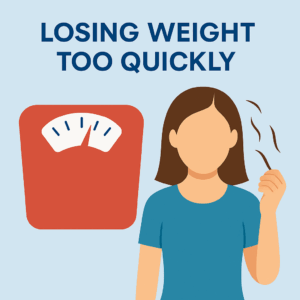
3. Losing Weight Too Quickly
Even without GLP-1 medications, dramatic weight loss can trigger hair shedding. GLP-1 drugs often accelerate weight loss significantly.
The faster the weight drops, the more stressed the body becomes, and the higher the risk of a Telogen Effluvium response. This is why many women report shedding two to three months after a major weight change; the hair is reacting to stress that occurred months earlier.
Why Balance Matters
Continue following your medical provider’s instructions for GLP-1 medications, but aim for:
- Steady, sustainable weight loss rather than extreme changes
- Consistent intake of nourishing foods, even with a reduced appetite
- Monitoring your hair and scalp for early signs of shedding
- Seeking evaluation sooner rather than later if thinning becomes visible
How to Protect Your Hair During (and After) GLP-1 Weight Loss
In our trichology center, we focus on two key goals: improving the scalp environment and, when needed, restoring the appearance of fullness.
Two Ways We Help Support Your Hair
Scalp Health Approach
For women primarily experiencing shedding, itch, oiliness, or flaking, the focus is on improving scalp health so hair can grow as strongly as possible.
- ScalpCheck® to understand what is happening
- Professional scalp treatments and at-home protocols
- Nutrient and routine support (such as Havogen 5)

Hair Restoration Approach
For women who are already seeing more scalp than hair or who feel their density is not returning, the focus shifts to restoring visible fullness.
- Hair Solution Consultation to evaluate thinning patterns
- Custom-designed toppers tailored to the specific area of loss
- Other non-surgical hair replacement options when appropriate
 Support the Follicle from the Inside
 Support the Follicle from the Inside
As you and your doctor manage your GLP-1 dosage and nutrition, you can also support your follicles with targeted nutrients. In our center, the Havogen 5 Patch delivers ingredients like Saw Palmetto, Avocuta (from avocado), antioxidants, and vitamins through the skin as part of a guided program.
Maintain a Consistent Scalp Routine
Healthy hair requires a healthy scalp. That means:
- Cleansing often enough to remove oils, buildup, and product residue
- Balancing oil and hydration, rather than stripping the scalp
- Avoiding harsh products or routines that irritate the skin
- Using trichologist-recommended products tailored to your scalp type
Schedule a ScalpCheck® if Shedding Persists
The hardest part of GLP-1 related shedding is the uncertainty: not knowing whether it is temporary or a sign of something more. A ScalpCheck® helps separate fear from fact so you can make informed decisions.
Schedule a ScalpCheck® if you notice ongoing shedding, itching, flaking, or changes in density.
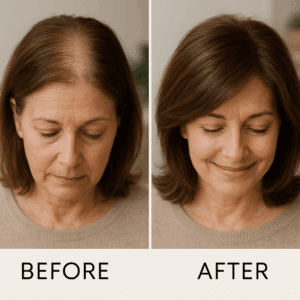
When Shedding Turns Into Thinning: Cosmetic Options That Restore Confidence
If you are seeing:
- A widening part
- More scalp showing through at the crown
- Hair that grows back noticeably finer than before
- Density that has not returned several months after weight stabilization
you may be experiencing miniaturization or pattern-related thinning in addition to Telogen Effluvium.
This does not automatically mean you need a full wig. Many women do best with a custom-designed topper, which:
- Blends with their natural hair
- Restores fullness at the part, crown, or top of the head
- Can be sized and shaped specifically for their area of loss
- Feels far less intimidating than a traditional wig
- Is cut, colored, and styled to look like their hair
Hair Solution Consultation: Exploring Your Options
During a Hair Solution Consultation, we look at where and how your hair is thinning, talk through your lifestyle, and explore solutions such as toppers, custom wigs, or other non-surgical options tailored to your needs.
Schedule a Hair Solution Consultation if you are seeing more scalp than hair or feel your density is not returning after GLP-1 related shedding.
The Bottom Line: GLP-1 Hair Thinning Is Real, But Often Manageable
Most thinning linked to GLP-1 weight-loss medications is indirect and, in many cases, reversible with the right support. But if you are noticing visible changes in your density or feel like you no longer recognize your hair in the mirror, you are not without options.
By:
- Protecting your nutrition
- Monitoring and caring for your scalp
- Getting a professional evaluation when shedding persists
- Exploring cosmetic solutions when thinning becomes visible
you can move through your weight-loss journey with both your health and your confidence in mind.
If you are concerned about hair thinning while using a GLP-1 medication, we are here to help you understand what is happening and what your options are next.
Frequently Asked Questions
Is hair loss a side effect of Ozempic or Wegovy?
Hair thinning is not listed as a direct side effect of Ozempic, Wegovy, or other GLP-1 medications. However, changes in appetite, rapid weight loss, and metabolic stress can indirectly trigger shedding in some people.
Does Ozempic cause Telogen Effluvium?
It can contribute to Telogen Effluvium indirectly. The body’s response to rapid weight loss, reduced nutrient intake, or other stressors associated with GLP-1 use can shift more follicles into the resting and shedding phase.
Will my hair grow back after GLP-1 related shedding?
In many cases of Telogen Effluvium, hair growth resumes once the underlying stressor is addressed and the body stabilizes. If miniaturization or pattern thinning has also begun, you may need additional trichology support or cosmetic solutions.
How long does Ozempic-related hair loss last?
Telogen Effluvium shedding often appears two to three months after the triggering event and may last several months. Visible improvement can take three to six months or longer, depending on the individual and overall health of the scalp and follicles.
Can toppers help with GLP-1 related hair thinning?
Yes. Toppers can be an excellent option for women who are seeing more scalp than hair on the top or crown of the head and want to restore fullness while their hair and scalp recover.
{
“@context”: “https://schema.org”,
“@graph”: [
{
“@type”: “Article”,
“@id”: “https://www.hairscalp.com/ozempic-wegovy-hair-thinning-women#article”,
“headline”: “Ozempic, Wegovy & Hair Thinning in Women: What\u2019s Really Happening (And What You Can Do About It)”,
“description”: “Many women using GLP-1 weight-loss drugs like Ozempic and Wegovy are noticing hair thinning, even though hair loss is not a listed side effect. This article explains why shedding happens, what may be reversible, and how trichology evaluations and cosmetic solutions such as toppers can help.”,
“author”: {
“@type”: “Organization”,
“name”: “Jeffrey Paul\u2019s Hair & Scalp Specialists”
},
“publisher”: {
“@type”: “Organization”,
“name”: “Jeffrey Paul\u2019s Hair & Scalp Specialists”
},
“mainEntityOfPage”: {
“@type”: “WebPage”,
“@id”: “https://www.hairscalp.com/ozempic-wegovy-hair-thinning-women”
}
},
{
“@type”: “FAQPage”,
“@id”: “https://www.hairscalp.com/ozempic-wegovy-hair-thinning-women#faq”,
“mainEntity”: [
{
“@type”: “Question”,
“name”: “Is hair loss a side effect of Ozempic or Wegovy?”,
“acceptedAnswer”: {
“@type”: “Answer”,
“text”: “Hair thinning is not listed as a direct side effect of Ozempic, Wegovy, or other GLP-1 medications. However, changes in appetite, rapid weight loss, and metabolic stress can indirectly trigger shedding in some people.”
}
},
{
“@type”: “Question”,
“name”: “Does Ozempic cause Telogen Effluvium?”,
“acceptedAnswer”: {
“@type”: “Answer”,
“text”: “Ozempic and other GLP-1 medications can contribute to Telogen Effluvium indirectly. The body\u2019s response to rapid weight loss, reduced nutrient intake, or other stressors associated with GLP-1 use can shift more follicles into the resting and shedding phase.”
}
},
{
“@type”: “Question”,
“name”: “Will my hair grow back after GLP-1 related shedding?”,
“acceptedAnswer”: {
“@type”: “Answer”,
“text”: “In many cases of Telogen Effluvium, hair growth resumes once the underlying stressor is addressed and the body stabilizes. If miniaturization or pattern thinning has also begun, you may need additional trichology support or cosmetic solutions.”
}
},
{
“@type”: “Question”,
“name”: “How long does Ozempic-related hair loss last?”,
“acceptedAnswer”: {
“@type”: “Answer”,
“text”: “Telogen Effluvium shedding often appears two to three months after the triggering event and may last several months. Visible improvement can take three to six months or longer, depending on the individual and overall health of the scalp and follicles.”
}
},
{
“@type”: “Question”,
“name”: “Can toppers help with GLP-1 related hair thinning?”,
“acceptedAnswer”: {
“@type”: “Answer”,
“text”: “Yes. Toppers can be an excellent option for women who are seeing more scalp than hair on the top or crown of the head and want to restore fullness while their hair and scalp recover.”
}
}
]
}
]
}