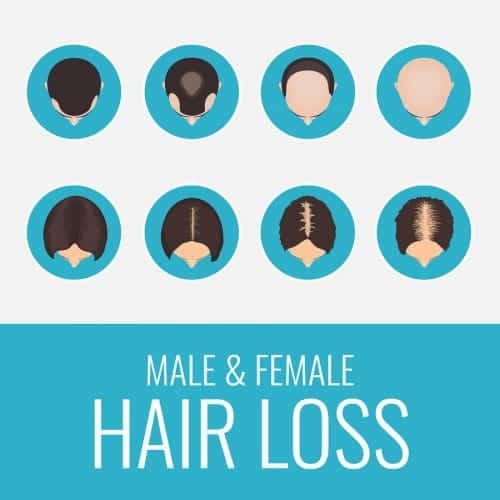
Hair loss is one of the biggest contributors to stress in our culture, with the most common cause of hair loss being hereditary hair loss. Individuals with hereditary hair loss experience what is called miniaturization of hair. Miniaturization occurs when the hair follicle shrinks in size causing the individual hairs to become smaller and finer. Causes of miniaturization include but are not limited to
stress, DHT, and medications. If nothing is done to treat these miniaturized hairs, the follicle will go away and the hair will be lost for good.
Fight Back Against Miniaturized Hair
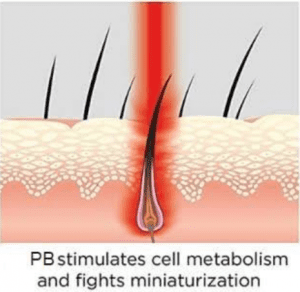
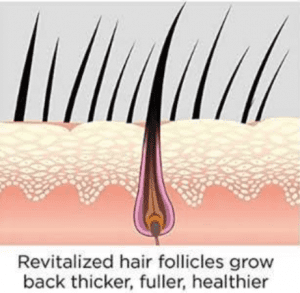
You don’t have to stand for miniaturized hair any longer thanks to TricoGlam Home! TricoGlam Home is our revolutionary new light therapy device designed to prevent and treat hair loss at home. This lightweight helmet uses 105 specialized red LED lights to fight hair miniaturization by increasing the microcirculation of blood vessels to the scalp and increasing nourishment to hair follicles. The result is revitalized hair follicles that grow faster, thicker, and healthier.
5 Minutes Daily Fights Miniaturization
TricoGlam Home is convenient and easy to use! It has a rechargeable battery that uses a USB port, similar to most Smartphone devices. Once charged, place the TricoGlam helmet on your head and the LED treatment begins – it’s as simple as wearing a hat. For best results, we recommend using TricoGlam as a part of your scalp and hair care protocol. Wear for 5 minutes per day or 20 minutes twice weekly to penetrate your scalp to stimulate growth of your existing hairs and help revitalize miniaturized hairs.
When used with the proper hair and scalp protocol the benefits of the TricoGlam Home are increased dramatically!
Want to find out more about the health of your hair and scalp? Then a ScalpCheck is where you need to begin!
There are hundreds if not thousands of options of shampoos available to consumers today. The fancy packaging, crafty marketing lingo and claims may give you the feeling that what you are using is right for your hair and scalp. But is it? Do you really know if your shampoo is helping, hurting or contributing to a hair or scalp issue? Here are 5 – things you should know about your shampoo:
1. Looks can be deceiving…
The back of the bottle is more important
The fancy packaging, crafty marketing words and claim on the front of the bottles may give you the feeling that what you are using is right for your hair and scalp. The key to the right shampoo is not how pretty the front of the bottle, It’s what inside, the ingredients, that makes all the difference to your hair and scalp!
2. How often matters…
You Should Be Shampooing Every Day
That’s right… every day! The key is every day with the RIGHT type of shampoo which should contain a mild detergent in it designed to help keep oil and hydration of the scalp and hair in a balanced state. If you feel your shampoo would dry your hair out if you used it each day, you have the wrong shampoo.
3. It’s $3 for a reason…
There Is A Reason It Is So Cheap
Ingredients, ingredients, ingredients! Shampoos that cost $3 contain ingredients that are either a majority of water (so you have to use more to get a result) or are inexpensive and ineffective. High quality ingredients make a world of difference for your hair and scalp.
4. How much is important…
Too Much Or Too Little Can Lead To Problems
More product is not always better. The more product you use the more it takes to rinse it out, and the greater likelihood of product buildup. Similarly, using too little of the product will not achieve the desired results. Oh, and don’t forget to emulsify the product in your hand before working into your hair.
5. Shampoo is not the cure-all…
It’s Only On Your Head for About 1-Minute
Shampoo is not designed to fix the root issues of dandruff, excessive scalp itch, oily hair, or hair loss and hair thinning. It can help with symptoms, but to really help lessen or eliminate these issues you need to discover the health of your hair and scalp.
You are not alone if you suffer from dandruff, excessive scalp itch, oily hair, hair loss or hair thinning. Most people experience some degree of these hair and scalp problems. If you’ve attempted to self-diagnose and treat your own hair and scalp problems with a shampoo, you may have found no improvements, a worsening problem, or sometimes an entirely new problem results.
There are hundreds if not thousands of shampoo options available to consumers today. The fancy packaging, crafty marketing lingo and claims may give you the feeling that what you are using is right for your hair and scalp. But is it? Do you really know if your shampoo is helping, hurting or contributing to a hair or scalp issue?
“Magical Shampoo” Does Not Exist Shampoos are not designed to treat the root cause of hair and scalp issues. Their singular purpose is ultimately to cleanse your hair and scalp. Something that is too good to be true, usually is. Shampoos that promise to eliminate dandruff, decrease hair loss, or condition and cleanse can be misleading. These lofty promises can be made if the shampoo contains at least one ingredient that can somewhat help with
What About The Cleanser? Remember the main purpose of shampoo is to cleanse the scalp. You need to have a cleanser in your shampoo otherwise your hair and scalp are not getting clean. If the cleanser is not listed as one of the first three ingredients, the shampoo is not serving its purpose and ultimately could be wasting your money—or worse, adding to a scalp problem you weren’t aware of.
The type of cleanser is also important to the health of your hair and scalp. We recommend shampooing every day, but with the right type of shampoo. That right type of shampoo has a mild cleanser designed to balance oil and hydration of the scalp, promoting a healthier environment for hair to grow in. Do you avoid shampooing every day because it makes your hair too dry? This is a sign that the shampoo you are using contains a cleanser that is too strong, creating a drying effect that can lead to other hair and scalp problems.
Know Your Scalp Before Your Shampoo
How can you find out if your shampoo and other hair care products are right for you? Don’t ignore problems like dandruff, scalp itch, oily hair, or excess shedding. Left untreated these issues can lead to hair loss and hair thinning. Stop self-diagnosing your own hair and scalp problems.
Don’t go it alone, our of trichologists can help you discover the health of your hair and scalp with their exclusive ScalpCheck. This in-depth analysis begins by looking at your current hair care and styling routine, as well as key contributing factors like diet, lifestyle, certain medications and heredity. Next, using proprietary TricoTest software, along with non-invasive, non-surgical medical appliances and three different camera magnifications, they identify the scalp’s levels of oil, hydration and pH, which all play an important role in the health of the hair and scalp. Once your ScalpCheck is complete, a customized treatment plan is created based on what’s best for your specific hair and scalp condition.
Now is a perfect time to schedule a ScalpCheck to discover the health of your hair and scalp and be sure your shampoo or scalp problem isn’t masking a bigger hair and scalp problem.
TricoGlam Home is a new, first of its kind red LED light wavelengths designed to more effectively treat hair loss and other hair and scalp problems. The TricoGlam Home is the perfect compliment to a hair and scalp treatment routine.
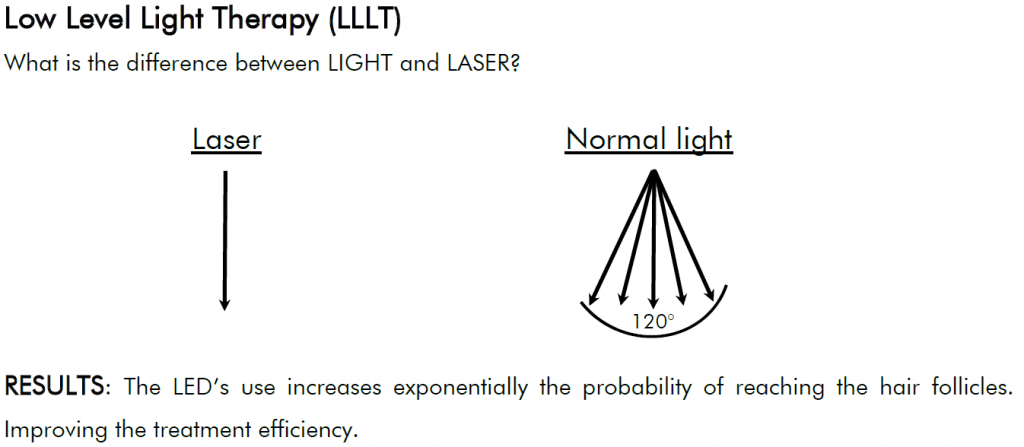
Laser versus LED
Until now LLLT devices have only used laser diodes that are pinpointed to one area of the scalp and hair. Although the laser diodes are effective, the introduction of the red LED diodes allows for a more dispersed and fuller coverage of the hair and scalp without sacrificing the effectiveness of the light. Ultimately providing a better LLLT solution for your hair and scalp.
The holidays are a special time of year, but the stress they can add can lead to an increase in hair shedding. Is this normal, or a sign that points to bigger problems?
The holidays are fast approaching and along with them come the joys of the season like glad tidings, great food, and time spent with family & friends. One unforeseen effect of the holiday season is the added stress that they can cause and for some individuals this can lead to stress related hair loss.
Eight years ago, Rachel began experiencing anxiety-based hair loss. After doctor visits, blood tests and medications, Rachel wanted a more natural approach, and our team was there to provide support and the latest hair solutions infusing Italian-based 3D-technology that she needed.
Watch as Rachel’s full transformation of restoring her hair loss and her inner beauty of confidence that was lost with the loss of her hair.
Below you can watch each segment of Rachel’s Journey.
Recently, WKYC ran a special report by Senior Health Correspondent Monica Robins, on how 3D printing is changing the game for people who suffer from hair loss.
Monica had the unique opportunity to meet Patty, who 12 years ago was injured in a farming accident causing her scalp to be ripped off from the back of her neck, all the way forward to her eyelids. The violent force of the accident took most of her ears as well.
Often overlooked is the health of our hair and scalp, until something is wrong and symptoms like flaking, itch, excessive hair shedding or hair loss show up.
Eating healthy, exercising and decreasing stress are all steps many of us take to live a longer, healthier life. As a society, we understand the importance of preventative care when it comes to taking care of our bodies. Sometimes conditions that are diagnosed early can be easier to treat.
How often should you wash your hair? Will washing your hair every day make it fall out? Is shampooing less best? What shampoo should you use: clarifying, “low-poo” or “no-poo”? You are not the only one who has asked these questions.
We dig in to help separate the myths from the truth to set the record straight, while also helping you truly discover the health of your hair and scalp.
Hair loss or thinning caused by genetics is referred to as androgenetic alopecia, or, more commonly, hereditary hair loss.
Unfortunately, medical science has yet to discover a cure for hereditary hair loss. Thanks to advancements in science and medical research, however, we have a better understanding of how heredity affects hair thinning and hair loss and what we can do to prevent its onset.
If you suffer from dandruff, excessive scalp itch, hair loss or thinning and oily hair, you’re not alone. Most people experience some degree of one or all of them. Don’t self-diagnose your own hair and scalp problems. ScalpCheck™ will reveal the true reason and help you put those issues behind you.
Our experts are trained in trichology, the study of the hair and scalp, and use ScalpCheck™ to reveal the root cause of people’s conditions.
Recently, WKYC ran a special report by Senior Health Correspondent Monica Robins, who too was concerned about her itchy scalp and the hair loss she was experiencing. In the video above, she will take you through the ScalpCheck™ experience.
She got more than her hair back…she got her life back as well.
After being diagnosed with Grave’s Disease and suffering the side effects of this thyroid disorder and the medications associated with it, Linsey decided to seek help for her thinning hair. Too much of her life had been spent hiding and covering up, and she was ready to live her life again. After spending time with Hair & Scalp Specialists, a plan was put in place to help repair her beauty – both on the inside and out.
From the Consultation to determine the best solution for Linsey to the Design & Mold session, a personal blueprint was created specifically to meet her needs. To determine the best custom design solution, we had to consider her lifestyle, coverage needs, and maintenance requirements. These necessary conversations helped determine the best attachment method for Linsey, allowing her hair system to allow her to live her life without compromise! Watch Linsey’s story…
In this episode of Hair Loss Solution TV™, you will discover the following:
What Trichology is and why it’s critical to those with hair thinning and loss[00:13]
The Transplant process for eyebrow, eyelash, and hairline restoration[11:21]
The evolution of Transplants and their increased accuracy and precision [14:00]
Pre-and post-operativeprocedures utilizing Trichology for greater success [16:02]
The definition of PRP (Platelet Rich Plasma) and how it helps stimulate tissue generation and repair of the hair follicles [18:00]
What Formula 82M Compound Minoxidil is and how it might be a viable solution to help with hair regrowth[21:47]
What solutions are available to those with hair thinning and loss?
From learning the root cause of your hair thinning and loss to understanding the multitude of solutions available to you, Dr. Alan J. Bauman helps take you through the options available to help you live your life without compromise. Trichology, the study of hair and scalp problems, can help hair professionals properly assess the problem and determine a plan of action for your individual case. And in today’s scientificallyadvancedworld, there are plenty of Solutions for you. You’re not alone, and you don’t have to suffer from hair thinning and loss anymore! Book now to learn more about the solutions available to you.
Welcome to our Best of 2017 series. We’re counting down your favorite posts from Jeffrey Paul Blog and looking forward to some of the surprises we’re planning for 2018!
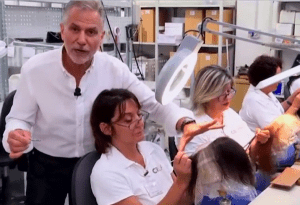
In this episode of Hair Loss Solutions TV™, I visit the Cesar Ragazzi Laboratories in Italy to give you a behind the scenes look at the process we use to give you the best hair transformation possible. Using the second scalp method, our hair loss and restoration experts create solutions that allow you to live your best life.
We want to know: What would your life look like with a second scalp and a full head of beautiful hair?
Remember…Beauty & Change Begin Within,
Jeffrey Paul
In this episode of Hair Loss Solutions TV™, you will discover the following:
Tour of the Cesare Ragazzi Laboratories in Bologna, Italy, where CNC 3-D prosthetic hair pieces are created [0:40]
The process of mapping and casting the head to create the molding to be transformed with 3-D Printing into a Hair Replacement [0:55]
The 39 steps involved in the Cesare Ragazzi Labs to produce a second scalp with hair to replicate growing hair [1:50]
The DNA and quality control checks performed to ensure that the hair and scalp are of the highest quality [5:22]
The art of injecting one hair at a time into the second scalp [8:15]
What is CNC 3-D “Second Scalp” Prosthesis?
By using the most technologically advanced, dermatologically-tested, non-invasive hair replacement system found anywhere today, this “Second Scalp” that allows people suffering from hair thinning and loss to enjoy a completely custom made full head of beautiful hair. After taking a mold of your scalp and mapping the areas of hair thinning and loss by a licensed certified center, the Cesare Ragazzi team is then able to take this mold and leverage 3-D Printed Technology to replicate a model of your scalp, perfectly matching the contour and shape of the hair loss site.
The model is produced with breathable biopolymer material that becomes your customized “second scalp.
The prosthesis is hypoallergenic and secured with a dermatologist-approved adhesive and allows you to live a normal life, including swimming, showering, exercising, etc. With a base consisting of antifungal, antimicrobial material, and biomedical materials, it adapts to your body temperature and allows sweat and heat to pass through. Only virgin, unprocessed hair is used in the CNC prosthesis, which makes it the highest quality of human hair. With the CNC 3-D prosthesis, you can truly live your life without compromise!