Understanding the causes of hair loss is the first step toward restoring healthy hair growth. In this section we explore the most common reasons people experience excessive shedding or thinning hair, including stress, hormonal changes, hereditary hair loss, telogen effluvium, and lifestyle factors that can disrupt the hair growth cycle. These articles help explain why hair loss occurs and when it may be a sign of a deeper scalp or follicle issue.
With fall approaching, you may start to notice an increase in hair shedding. Is this normal seasonal hair shedding, or a sign that points to bigger problems?
As the summer comes to an end and the fall months fast approach, so, too, does seasonal hair shedding. Seeing more hairs than normal on your hairbrush, on the bathroom floor or in the shower can leave the average man or woman in a bit of a panic. Is this kind of hair loss normal? Should you be concerned?
We shed an average of 80 to 100 hairs every day. This is considered normal, healthy hair shedding. These hairs that are shed are not lost. Instead, they are going through a cycle of growth, transition and then rest, when hairs release and are shed, before the process repeats. During certain times of the year, you may notice an increase in shedding, especially in the late fall months. This common phenomenon is known as seasonal shedding.
Conditioner is often seen as one of the most harmless products for hair. It is – unless it is used incorrectly. What if conditioner was the cause of your hair loss in both your growing hair and hair addition hair?
Properly using any product is key to achieving the desired results, but it is the incorrect use of a product that can have undesirable affects.
Watch as we take you through how you can get to the root of your hair loss and how a Trichologist can help…
How the health of your scalp can affect your hair loss,
What a Trichologist can do to help diagnose your problem and formulate solutions
The different treatments available and the importance of keeping a consistent treatment routine at home
The Problem…
If you suffer from dandruff, excessive scalp itch, hair loss or thinning and oily hair, you’re not alone. There are countless products on the market to help restore hair loss, but the root of the problem needs to be found. And this could involve the scalp.
Emmanuel Mroczka, a Trichology specialist at Jeffrey Paul’s Hair & Scalp Specialists who was interviewed by WKYC in Cleveland, Ohio, has helped with numerous scalp problems. One important element is to determine what is causing the hair loss problem to begin with. By performing a ScalpCheck®, experts can reveal the true reason and help you put those issues behind you.
In the video above, Senior Health Correspondent Monica Robins from WKYC takes you through the ScalpCheck® experience.
If you or someone you know is suffering from hair thinning or loss, scalp itch, or dandruff, book now to learn more about ScalpCheck®, an analysis to discover the true health of your hair and scalp.
The holidays are a special time of year, but the stress they can add can lead to an increase in hair shedding. Is this normal, or a sign that points to bigger problems?
The holidays are fast approaching and along with them come the joys of the season like glad tidings, great food, and time spent with family & friends. One unforeseen effect of the holiday season is the added stress that they can cause and for some individuals this can lead to stress related hair loss.
How often should you wash your hair? Will washing your hair every day make it fall out? Is shampooing less best? What shampoo should you use: clarifying, “low-poo” or “no-poo”? You are not the only one who has asked these questions.
We dig in to help separate the myths from the truth to set the record straight, while also helping you truly discover the health of your hair and scalp.
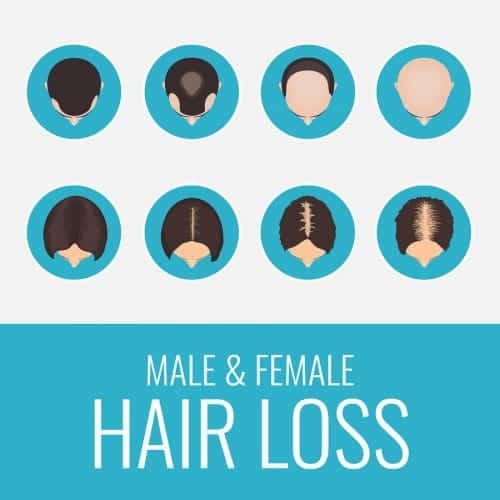
Hair loss or thinning caused by genetics is referred to as androgenetic alopecia, or, more commonly, hereditary hair loss.
Unfortunately, medical science has yet to discover a cure for hereditary hair loss. Thanks to advancements in science and medical research, however, we have a better understanding of how heredity affects hair thinning and hair loss and what we can do to prevent its onset.
She got more than her hair back…she got her life back as well.
After being diagnosed with Grave’s Disease and suffering the side effects of this thyroid disorder and the medications associated with it, Linsey decided to seek help for her thinning hair. Too much of her life had been spent hiding and covering up, and she was ready to live her life again. After spending time with Hair & Scalp Specialists, a plan was put in place to help repair her beauty – both on the inside and out.
From the Consultation to determine the best solution for Linsey to the Design & Mold session, a personal blueprint was created specifically to meet her needs. To determine the best custom design solution, we had to consider her lifestyle, coverage needs, and maintenance requirements. These necessary conversations helped determine the best attachment method for Linsey, allowing her hair system to allow her to live her life without compromise! Watch Linsey’s story…
Welcome to our Best of 2017 series. We’re counting down your favorite posts from Jeffrey Paul Blog and looking forward to some of the surprises we’re planning for 2018!
One of the things we like to do in this space is to share some of the science behind hair thinning and loss with you. In this episode of Hair Loss Solutions TV™, I talk about Trichotillomania and the options that are available for people suffering from this disorder. If this sounds like you, remember that we have a team of hair loss specialists waiting to help you.
We want to know: What hair thinning and loss topics do you want to know more about?
Remember…Beauty & Change Begin Within,
Jeffrey Paul
In this episode of Hair Loss Solutions TV™, you will discover the following:
If you’ve ever felt like pulling your hair out, you are not alone. While this is a common figurative phrase, pulling your hair in a literal sense is very real, and it’s a common disorder that many people may not even realize exists.
What is Trichotillomania?
Trichotillomania, a neurobiological and behavior disorder known as “Hair Pulling Disorder,” is the repetitive pulling out of one’s hair. According to the TLC Foundation, “Trichotillomania is one of a group of behaviors known as Body-Focused Repetitive Behaviors (BFRBs), self-grooming behaviors in which individuals pull, pick, scrape, or bite their hair, skin, or nails, resulting in damage to the body.” Trichotillomania affects about 1 in 25 people, and the best way to manage this disorder is to educate yourself. While many who experience these urges feel shame and embarrassment, it is essential to spread the message that they are not alone, and there is help out there.
In the video above, Clinical Psychologist Dr. Renae Reinardy discusses this common disorder, the variations of severity and the options for people suffering from this problem that are available.
If you or someone you know has hair loss due to the pulling urges, contact us at Jeffrey Paul’s Hair and Scalp Specialists. We can help assess the problem and provide guidance as to your next steps.
Ah, menopause! That natural biological process and inevitable rite of passage that all women experience at some point in their lives. And while every woman’s menopause experience is different, there are some common menopausal symptoms that cause the greatest disruption to everyday life. While hot flashes, mood swings and weight gain are expected during “the change,” many women are unaware and unprepared for the hair thinning and hair loss that can take place during this time. In fact, nearly 40 percent of women experience hair thinning during and after menopause.
For women going through menopause, the cause of hair loss is almost always related to hormonal changes. The body produces less of the female hormones estrogen and progesterone, which are the main triggers for hair growth. When the levels of progesterone and estrogen drop, hair growth slows and hair tends to become thinner. Lifestyle changes, including diet and sleeping habits, can also take a toll. For women experiencing menopause, the added anxiety of hair loss can have devastating effects on one’s self-confidence and daily outlook.
Imagine stepping into the shower to wash your hair and noticing patches of your healthy hair falling down your shoulders onto the ground around you, leaving spots of baldness on your head. For Claudia, a woman who was used to having a full head of healthy hair all her life, this nightmare became her reality.
It’s called Alopecia, or “spotted baldness” – a condition where your immune system mistakenly attacks the hair follicles, leading to patches of hair loss. There’s currently no cure for the condition, but there are treatments that can help.
In this episode of Hair Loss Solutions TV, you’ll hear about Claudia’s story of living with Alopecia and learn more about the condition and treatments available.
If You Have Hair Loss Due to a Thyroid Disorder, You are Not Alone!
Meet Linsey…
She got more than her hair back…she got her life back as well.
After being diagnosed with Grave’s Disease and suffering the side effects of this thyroid disorder and the medications associated with it, Linsey decided to seek help for her thinning hair. Too much of her life had been spent hiding and covering up, and she was ready to live her life again. After spending time with Hair & Scalp Specialists, a plan was put into place to help repair her beauty – both on the inside and out.
From the Consultation to determine the best solution for Linsey to the Design & Mold session, a personal blueprint was created specifically to meet her needs. To determine the best custom design solution, we had to consider her lifestyle, coverage needs, and maintenance requirements. These necessary conversations helped determine the best attachment method for Linsey, allowing her hair system to allow her to live her life without compromise! Watch Linsey’s story…
As we mentioned in our February newsletter, we’re celebrating the pregnancy of one of our stylists, Clair. She and her fiancé are expecting a baby boy in the coming months. This got us talking about pregnancy and its effects on hair and the scalp.
Many women look forward to the “glow” of pregnancy. During this exciting time, higher levels of hormones can cause many physiological changes – bright, shiny skin and fast growing, fuller hair. Increased estrogen in the body extends the growth phase of hair, resulting in reduced shedding and changes in texture which can make for seemingly fuller locks.
We all have a favorite shampoo. You know, the one that makes your hair smell like vanilla and promises shinier, thicker and healthier tresses. Maybe you chose that shampoo based on the recommendation of a hairstylist. Or, maybe you began using it because your best friend swears by it or you read that it’s your favorite celebrity’s secret to her gorgeous locks. But have you ever really read the ingredients of your shampoo and considered how they interact with your hair and your scalp?
The recent buzz around claims that certain conditioning cleansers and dry shampoos cause hair loss has many wondering if their favorite shampoo could be causing damage that can lead to hair loss, too. While those products may not be causing direct hair loss, the wrong product on the wrong hair type can certainly cause hair and scalp issues, including dreaded hair loss.
At Jeffrey Paul Hair Restoration Center, we know it’s been an incredibly stressful time. The time leading up to the election, and the event itself, has left a lot of people distressed and uncertain. Couple those feelings with the hustle and bustle that arrives during the upcoming holidays, and you have the potential for a lot of stressed out Americans. How is all this stress affecting your hair, and are there things that can be done to prevent hair loss?
Stress, anxiety and depression are never good for your body especially when combined with the medications that can be associated with them. When dealing with factors that contribute to hair loss, one of the biggest internal components is the medications used to treat those conditions. Drugs dealing with high blood pressure, cholesterol, mood enhancing (anti-depressants) and hormones (hormone enhancement, menopause, birth control and testosterone) can all lead or contribute to hair thinning problems.
A scalp problem or hair loss cannot be solved through the use of just a shampoo or a conditioner. However, Trichology can help identify what is taking place on your scalp and through a synergy of targeted products and a serious and complete protocol, my team is now able to fight the major causes that affect our hair and scalp condition. These include the following:
Hair Loss Prevention Protocol: Fights hair loss, gives hair volume, strength and new life to miniaturized, thin and weak hair.
Anti-Dandruff Protocol – Fights persistent dry dandruff, helping those with scalp irritations, scalp tenderness, redness, and excessive itch.
Sebum Regulating Protocol – Purifies the scalp and frees it from excess oil production that could affect hair metabolism making hair dirty, heavy, weak and thin.





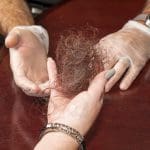 changes. The body produces less of the female hormones estrogen and progesterone, which are the main triggers for hair growth. When the levels of progesterone and estrogen drop, hair growth slows and hair tends to become thinner. Lifestyle changes, including diet and sleeping habits, can also take a toll. For women experiencing menopause, the added anxiety of hair loss can have devastating effects on one’s self-confidence and daily outlook.