A healthy scalp is the foundation for healthy hair. In this category we explore common scalp conditions such as itching, excess oil, dandruff, inflammation, and follicle congestion that can contribute to hair shedding or thinning. Learn how scalp health, trichology analysis, and professional scalp treatments help restore balance to the scalp environment.
Hard water is something most people don’t think about—until their scalp starts to feel itchy, tight, or irritated after showering.
If you’ve noticed your scalp feeling itchy, tight, or irritated after showering, your water could be playing a bigger role than you realize.
Recently, we were featured in AARP The Magazine discussing how hard water impacts both skin and scalp health—especially as we age. It’s a conversation we have often in our center, because many of the scalp concerns we see are not just about products… they’re about environment.
Healthy hair begins with a healthy scalp. If you’re searching for a Trichological Scalp Treatment in Cleveland, you may be wondering what really happens during the process. Our treatments go beyond basic salon care to restore balance, improve scalp health, and protect the hair you have. Just like your skin benefits from a facial, your scalp benefits from this customized, restorative care.
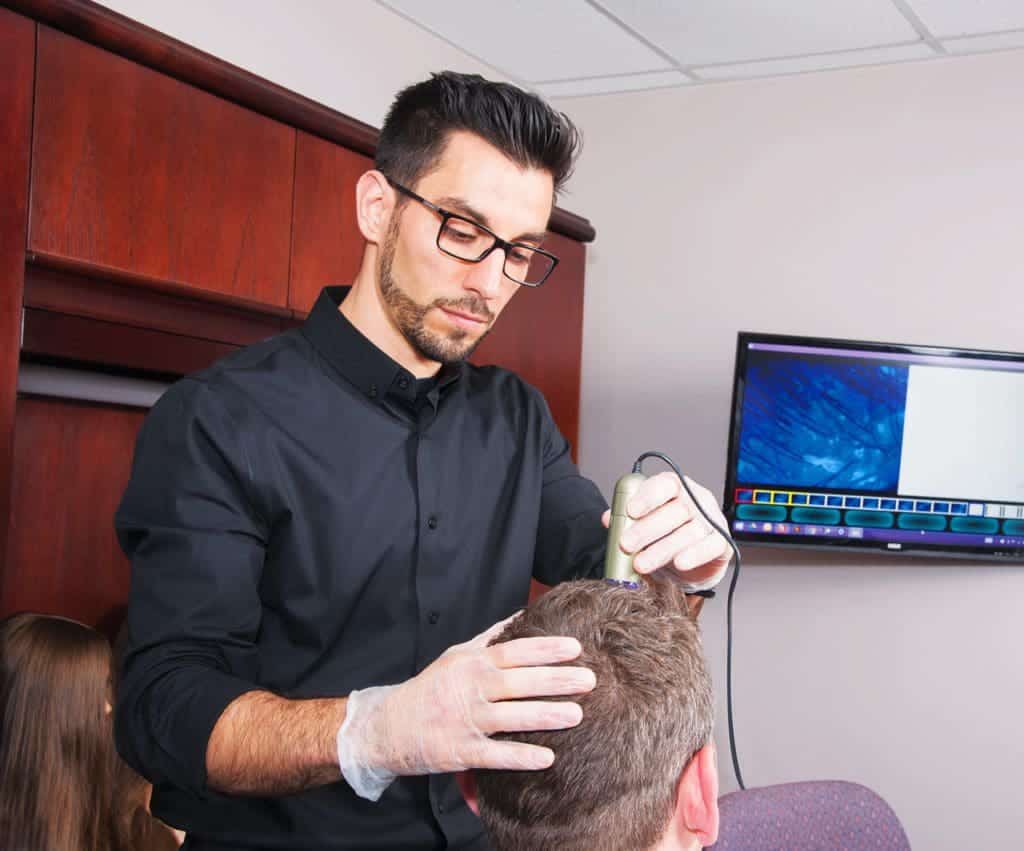
But here’s what makes the difference: Trichological Scalp Treatments are not “one-size-fits-all,” nor should they be self-diagnosed. Every guest begins with a ScalpCheck®, which allows our trained team to identify the root causes of your scalp concerns and build a customized treatment protocol.
Think it’s dryness or dandruff? The real culprit is likely excess oil—and your current routine may actually be making it worse.
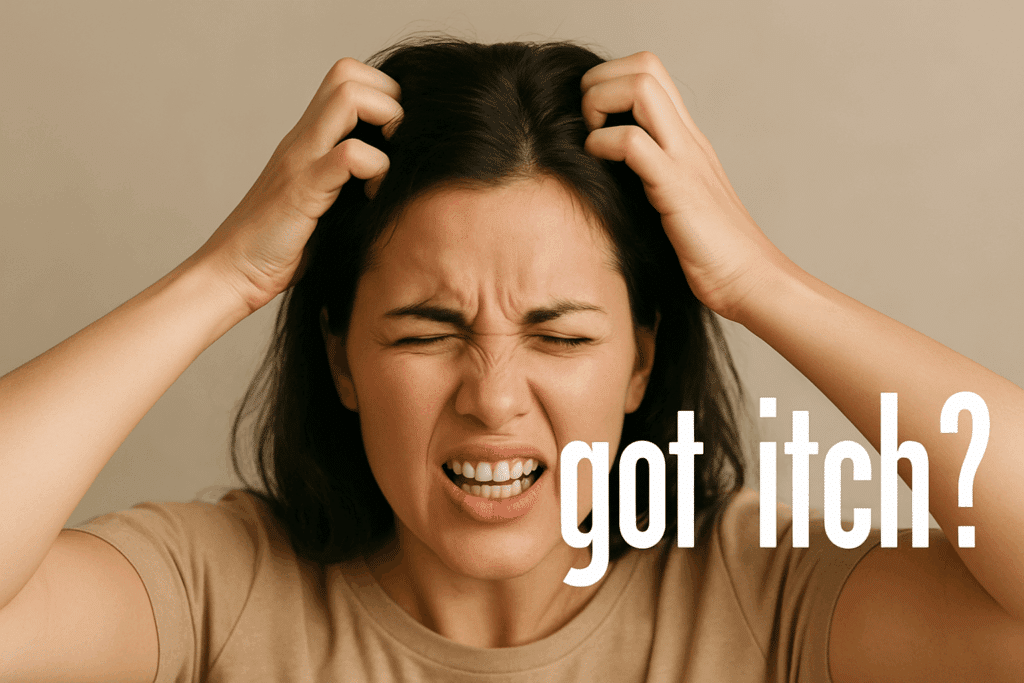
If your scalp itches, your first thought is probably, “It must be dry.”
You might reach for conditioner, scalp oils, or even Head & Shoulders—only to find it gets worse.
Here’s the thing: most itchy scalps aren’t dry. They’re oily.
And that “itch” you’re feeling? It’s often inflammation from oil buildup—not a lack of moisture. As trichologists, we see this every day. Understanding the real cause is the first step toward relief.
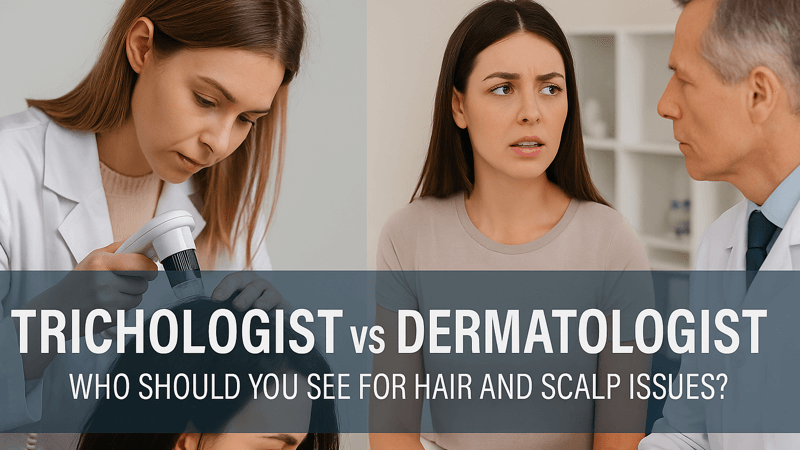
Are you experiencing dandruff, hair shedding, scalp itchiness, or oil buildup? You might be wondering if you should see a trichologist or dermatologist. Understanding the difference between a trichologist vs dermatologistis the first step to finding the right help for your hair and scalp issues.
Let’s break down the differences and help you decide who’s the right fit for your concerns.
A commonly asked question we hear is, “What is the difference between a trichologist and a dermatologist, and do I need a trichologist?” To answer this question, we must first look at what Trichology is and the difference between a dermatologist and a trichologist.
What is Trichology?
Trichology is the scientific study of hair, hair loss, and scalp problems. Trichology was first recognized as a para-medical or non-physician discipline in Britain in 1902.
Nearly a century later, Trichology is being recognized & practiced in the United States. Trichology is commonly thought of as a branch between cosmetology and dermatology.
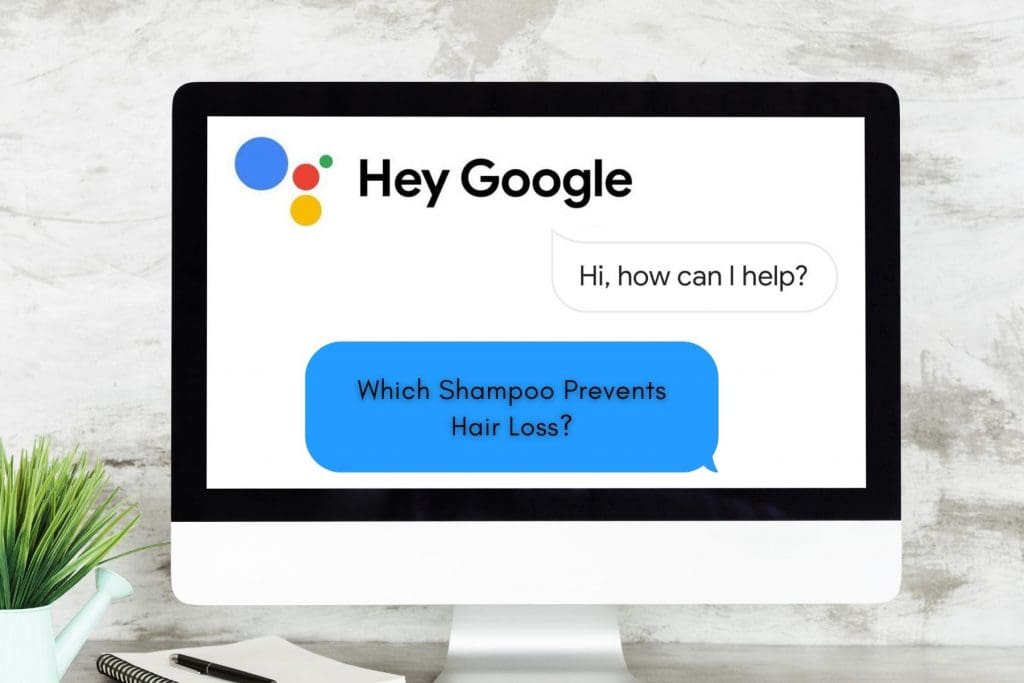
It’s a question we hear all the time! You begin noticing more hair than usual collecting in your shower drain or bathroom floor. Or maybe your hair has lost volume or your ponytail has gotten noticeably smaller. You begin to worry, try to figure out what is going on and how you can prevent further hair loss and ultimately get your hair back. The answer must be that the shampoo you are using isn’t the right one and so the obvious next step… “Hey Google – Which shampoo prevents hair loss?”
Thousands of products begin to fill your screen and you are left with determining which is best for you? Which shampoo has the best model with the hair that looks just like you want yours to look? Which shampoo makes the most enticing claims to restore hair that has been lost?
We are here to answer the question once and for all – Which shampoo prevents hair loss?
You are not alone if you suffer from dandruff, excessive scalp itch, oily hair, hair loss or hair thinning. Most people experience some degree of these hair and scalp problems. If you’ve attempted to self-diagnose and treat your own hair and scalp problems with a shampoo, you may have found no improvements, a worsening problem, or sometimes an entirely new problem results.
There are hundreds if not thousands of shampoo options available to consumers today. The fancy packaging, crafty marketing lingo and claims may give you the feeling that what you are using is right for your hair and scalp. But is it? Do you really know if your shampoo is helping, hurting or contributing to a hair or scalp issue?
“Magical Shampoo” Does Not Exist Shampoos are not designed to treat the root cause of hair and scalp issues. Their singular purpose is ultimately to cleanse your hair and scalp. Something that is too good to be true, usually is. Shampoos that promise to eliminate dandruff, decrease hair loss, or condition and cleanse can be misleading. These lofty promises can be made if the shampoo contains at least one ingredient that can somewhat help with
What About The Cleanser? Remember the main purpose of shampoo is to cleanse the scalp. You need to have a cleanser in your shampoo otherwise your hair and scalp are not getting clean. If the cleanser is not listed as one of the first three ingredients, the shampoo is not serving its purpose and ultimately could be wasting your money—or worse, adding to a scalp problem you weren’t aware of.
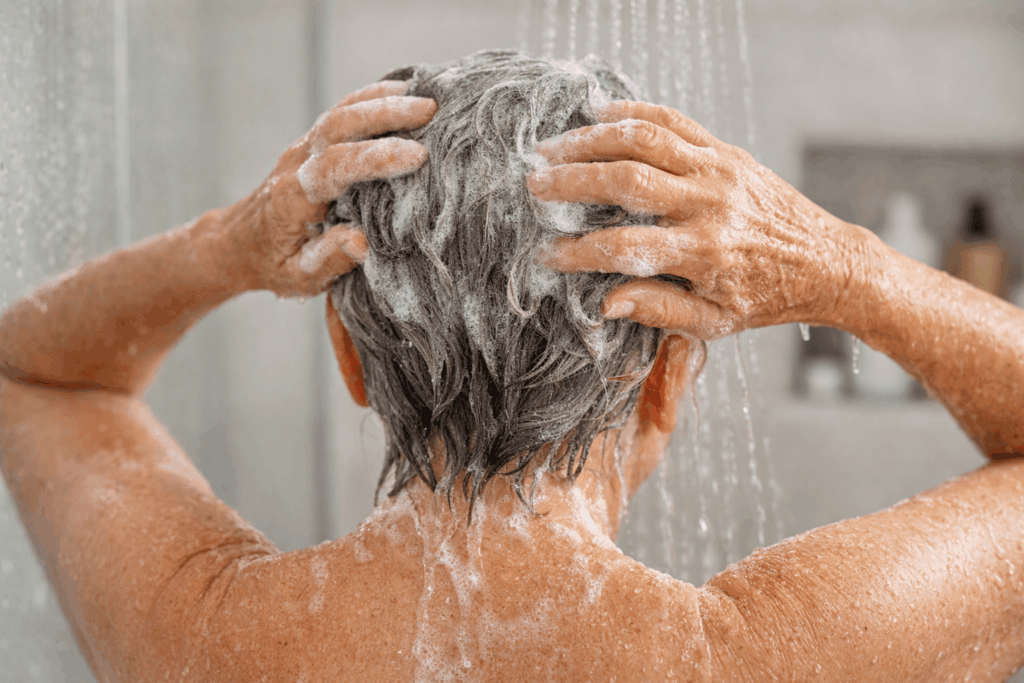
The type of cleanser is also important to the health of your hair and scalp. We recommend shampooing every day, but with the right type of shampoo. That right type of shampoo has a mild cleanser designed to balance oil and hydration of the scalp, promoting a healthier environment for hair to grow in. Do you avoid shampooing every day because it makes your hair too dry? This is a sign that the shampoo you are using contains a cleanser that is too strong, creating a drying effect that can lead to other hair and scalp problems.
Know Your Scalp Before Your Shampoo
How can you find out if your shampoo and other hair care products are right for you? Don’t ignore problems like dandruff, scalp itch, oily hair, or excess shedding. Left untreated these issues can lead to hair loss and hair thinning. Stop self-diagnosing your own hair and scalp problems.
Don’t go it alone, our of trichologists can help you discover the health of your hair and scalp with their exclusive ScalpCheck. This in-depth analysis begins by looking at your current hair care and styling routine, as well as key contributing factors like diet, lifestyle, certain medications and heredity. Next, using proprietary TricoTest software, along with non-invasive, non-surgical medical appliances and three different camera magnifications, they identify the scalp’s levels of oil, hydration and pH, which all play an important role in the health of the hair and scalp. Once your ScalpCheck is complete, a customized treatment plan is created based on what’s best for your specific hair and scalp condition.
Now is a perfect time to schedule a ScalpCheck to discover the health of your hair and scalp and be sure your shampoo or scalp problem isn’t masking a bigger hair and scalp problem.
Welcome to our Best of 2017 series. We’re counting down your favorite posts from Jeffrey Paul Blog and looking forward to some of the surprises we’re planning for 2018!
At Jeffrey Paul Salon, we have a team of experts to help you find the best hair solutions. We make sure that each hair transformation is customized to your unique needs. This process begins with a ScalpCheck to address any scalp issues you may have. Through our experienced staff, we can help you put your scalp issues behind you.
We want to know: What is holding you back from getting help with your hair thinning and loss?
Remember…Beauty & Change Begin Within,
Jeffrey Paul
The Problem…
If you suffer from dandruff, excessive scalp itch, hair loss or thinning and oily hair, you’re not alone. There are countless products on the market to help restore hair loss, but the root of the problem needs to be found. And this could involve the scalp.
Emmanuel Paul, a licensed Trichology specialist at Jeffrey Paul’s Hair & Scalp Specialists who was interviewed by WKYC in Cleveland, Ohio, has helped with numerous scalp problems. One important element is to determine what is causing the hair loss problem to begin with. By performing a ScalpCheck®, experts can reveal the true reason and help you put those issues behind you.
In the video above, Senior Health Correspondent Monica Robins from WKYC takes you through the ScalpCheck® experience.
Alex is a firefighter who found the solution to his chronic scalp itch and excessive dandruff problem after undergoing a ScalpCheck™ analysis.
If you suffer from dandruff or excessive scalp itch, you’re hardly alone. In fact, certified trichologist Emmanuel Paul of the Jeffrey Paul Hair Restoration Center in Fairview Park insists most people have some degree of dandruff or scalp itch.
“The problem is that most leading anti-dandruff shampoos hide the root problem instead of treating it,” Emmanuel says. Although most people associate dandruff with dryness, he explains, there actually are two types of dandruff that result from dry and oily scalps.
“Washing flakes out of your hair doesn’t remove the bacteria and the scalp conditions that cause them,” he says. “The real solution is to properly treat the scalp.”
An itchy scalp and hair filled with noticeable dandruff is what caused Alex Aella, a 35-year-old firefighter, to visit the Hair Restoration Center. Alex was convinced the chronic itching that drove him crazy for almost 10 years had to do with dandruff or dryness. A series of tests using proprietary diagnostic tools proved Alex’s theory wrong. He not only had dandruff, but also had a super oily scalp.
A scalp problem or hair loss cannot be solved through the use of just a shampoo or a conditioner. However, Trichology can help identify what is taking place on your scalp and through a synergy of targeted products and a serious and complete protocol, my team is now able to fight the major causes that affect our hair and scalp condition. These include the following:
Hair Loss Prevention Protocol: Fights hair loss, gives hair volume, strength and new life to miniaturized, thin and weak hair.
Anti-Dandruff Protocol – Fights persistent dry dandruff, helping those with scalp irritations, scalp tenderness, redness, and excessive itch.
Sebum Regulating Protocol – Purifies the scalp and frees it from excess oil production that could affect hair metabolism making hair dirty, heavy, weak and thin.
Your itchy, flakey head probably means you have dandruff, but do you really know how to eliminate it? Emmanuel Paul, of Jeffrey Paul Hair Restoration Center, has the answer.
The image on the screen reminds Mimi Creative Director Lynn Margalit of plant life in the winter. In reality, however, Lynn is viewing a 200x magnification fo Alex Aella’s scalp — a field of snowy-looking dandruff infiltrating a forest of hair. Alex, a 35-year-old firefighter and father of two, is convinced that his severely itchy head is not caused by dreaded white flakes. His head, he believes, isn’t dry enough to produce dandruff. But Emmanuel Paul, a certified trichologist at the Jeffrey Paul Hair Restoring Center, in Fairview Park, has a feeling that he’s going to find the real answer as he begins a thorough examination of Alex’s hair and scalp.
A series of tests using proprietary tools confirms his suspicion. Alex not only has dandruff, he has an extreme case of it. And, Emmanuel says, he has super oily scalp along with it.
“People associate dandruff with dryness,” Emmanuel explains.”In reality there are two types of dandruff, which come from dry as well as oily scalps. Most people have dandruff to some degree. That’s why Head and Shoulders is the biggest selling shampoo in the country.” Unfortunately, Emmanuel reveals, that popular product may hide the problem but it doesn’t fix it.
I would like to introduce you to Emmanuel Paul. Emmanuel is a certified Trichologist who has been trained by the Cesare Ragazzi company out of Bologna, Italy. Over the last year Emmanuel, together with the JPHRC team, has introduced the Cleveland area to a new form of taking care of your hair, or more importantly your scalp.
As Emmanuel explains it, you simply can’t have flawless beautiful-looking hair without a healthy scalp underneath. Yet, because it hides below the surface, we often overlook the importance of having a healthy scalp – until problems become noticeable. A beautiful head of hair starts with a healthy scalp; this is why treating the scalp… and not just the hair is so fundamentally important.
Think of your scalp as the foundation of your house. If you have a weak foundation, no matter how beautiful you build the home sooner or later it will begin to have problems. Very similar the scalp acts as the foundation for hair to grow from. Using product on the hair to create beautiful hair only goes so far, especially if the root cause is a week scalp foundation. A properly trained Trichologist can detect where the scalp is weak or needs strengthening and thus prescribe the proper treatments that can address problems as well as optimize the overall health, growth and beauty of your hair.
Most people who experience some of the most common scalp problems (such as dandruff, psoriasis, itchiness, excessive oil, the feeling of having a sensitive scalp and/or excessive hair fall out) have either not been able to find a solution, have been told there is no solution or have been improperly advised to use a product that is designed to mask or hide the problem. If you can relate to this… you are definitely not alone. The good news is that there is a solution that gets to the root of the problem in order to once again give you the hair you want.
A beautiful head of hair begins with a healthy scalp. There truly is a science behind this! Trichology is the study of the hair and scalp. And we can all face problems at one time or another – a few of those problems include dandruff, oily scalp, excessive hair fall out, etc. Are we destined to constantly brush off our shoulders or throw on a ball cap to hide our less than perfect scalp condition? The answer is no! A properly trained trichologist can detect and treat problems before they become noticeable.
I had the privilege to discuss these matters with a friend and colleague from Cesare Ragazzi Lab of Bologna, Italy. Cristiano Renna, a Biotechnologist and Trichologist, shared the reasons behind this common problems and what can be done to help.
As you heard in the video above, you should never lose hope! Listen to this testimonial. If you have any hesitation about seeking help, now is the time to do it. You deserve to feel confident again!
LISTEN TO THE SALON TESTIMONIAL (Click on the Play Button):
Through my partnership with Cesare Ragazzi Labs, Jeffrey Paul Salon is trained and certified to use the TricoTest® Software and medical appliances. These tools are designed to sense both hydration and oil levels in the skin and hair and establish the cause of hair and skin problems. At the same time, the patented software is designed to help prescribe the best treatment products and services in order to create healthier skin and hair.
My team would like to take care of your Scalp Analysis. You can call us at (440) 333-8939 or email us to schedule an appointment.
Let’s be honest, a scalp problem or hair loss, cannot be solved through the use of just a shampoo or a conditioner. However, Trichology can help identify what is taking place on your scalp and through a synergy of targeted products and a serious and complete protocol my team is now able to fight the major causes that affect our hair and scalp condition. These include:
Hair Loss Prevention Protocol: Fights hair loss, gives hair volume, strength and new life to miniaturized, thin and weak hair.
Anti-Dandruff Protocol – Fights persistent dry dandruff, helping those with scalp irritations, scalp tenderness, redness, and excessive itch.
Sebum Regulating Protocol – Purifies the scalp and frees it from excess oil production that could affect hair metabolism making hair dirty, heavy , weak and thin.
First, it is important to understand what Trichology is, in order to see how this study can help strengthen your existing hair and scalp and prevent against thin hair and hair loss in the future. Trichology is the study of the health of your hair and scalp. It is through this study that we are able to better determine the causes of hair fallout, hair breakage, and hair thinning as well as conditions with the scalp that can lead to both thin hair and hair loss.
All too often I meet men and women who are focusing on taking better care of their hair in order to have better quality hair or to maintain their hair for as long as possible. The missing link to this is that although taking care of your hair is very important it is of equal, if not of greater importance, to take care of your scalp.